By Rohan Gunaratna
Introduction
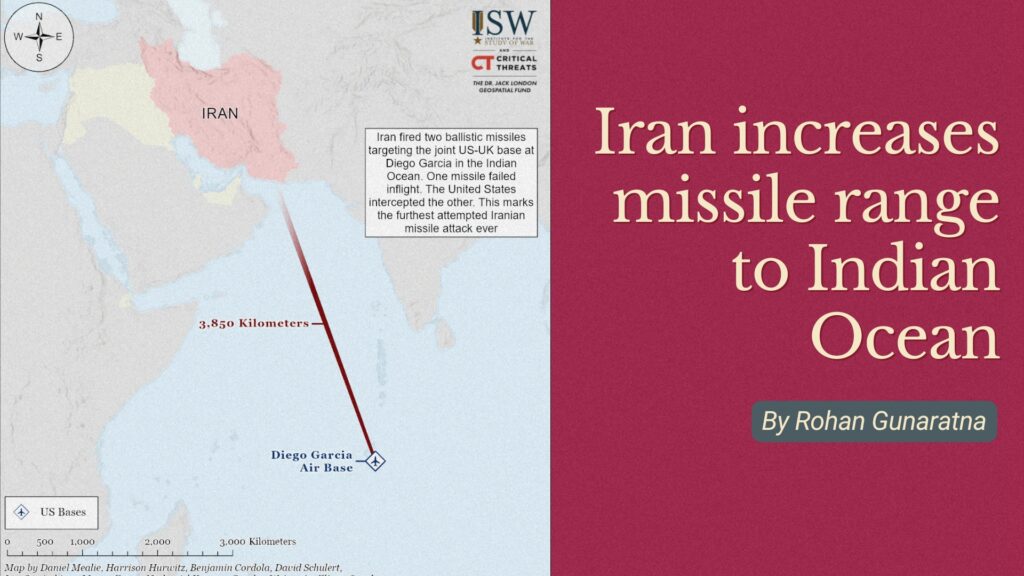
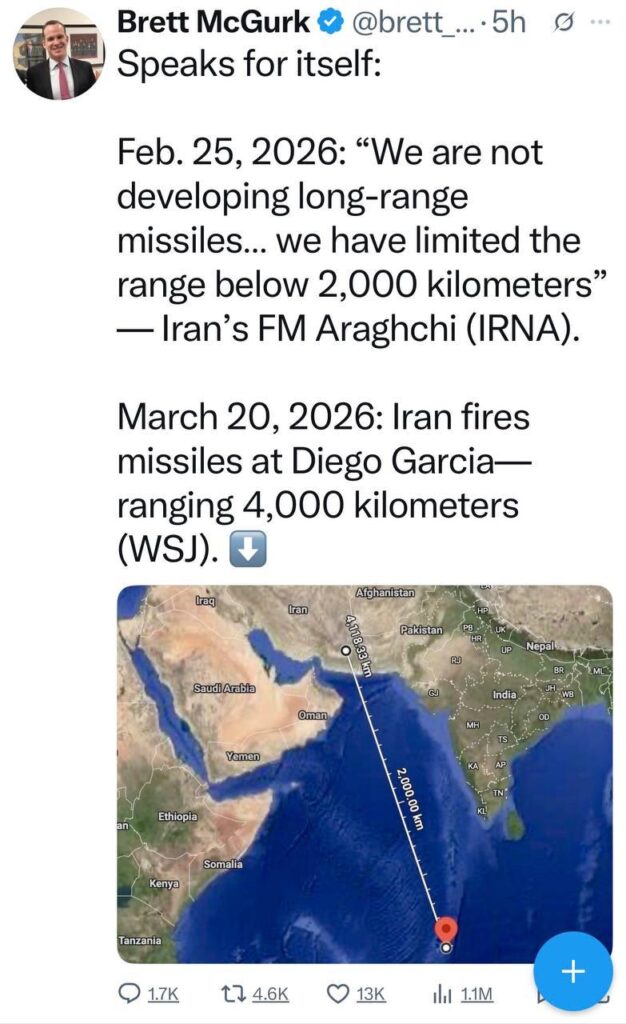
The Iranian missile attack on the joint U.S./UK military base in Diego Garcia in the Indian Ocean on March 21, 2026 is a threat to Europe, Asia and Africa.[1] A hub for bombers, submarines, logistics, and long-range operations, Diego García is a part of the mid-Indian Ocean ridge south of the Maldives and Lakshadweep.
The attack was prompted by the British government permitting the U.S. to use its military bases to strike Iranian missile sites used to target ships in the Strait of Hormuz. The Iranian Revolutionary Guard Corps (IRGC) attempt to target a US/UK base demonstrates that Tehran is ruled by a reckless team of leaders. After about 40 of Iran’s leaders including its Supreme Leader Ayatollah Ali Khamenei and Supreme National Security Council Secretary Ali Larjani were eliminated in Israeli and US military operations, Iranian regime is guided by a cabal that lack an understanding of either war-fighting or peace-making. They lack the sophistication either to de-escalate or to end the war.
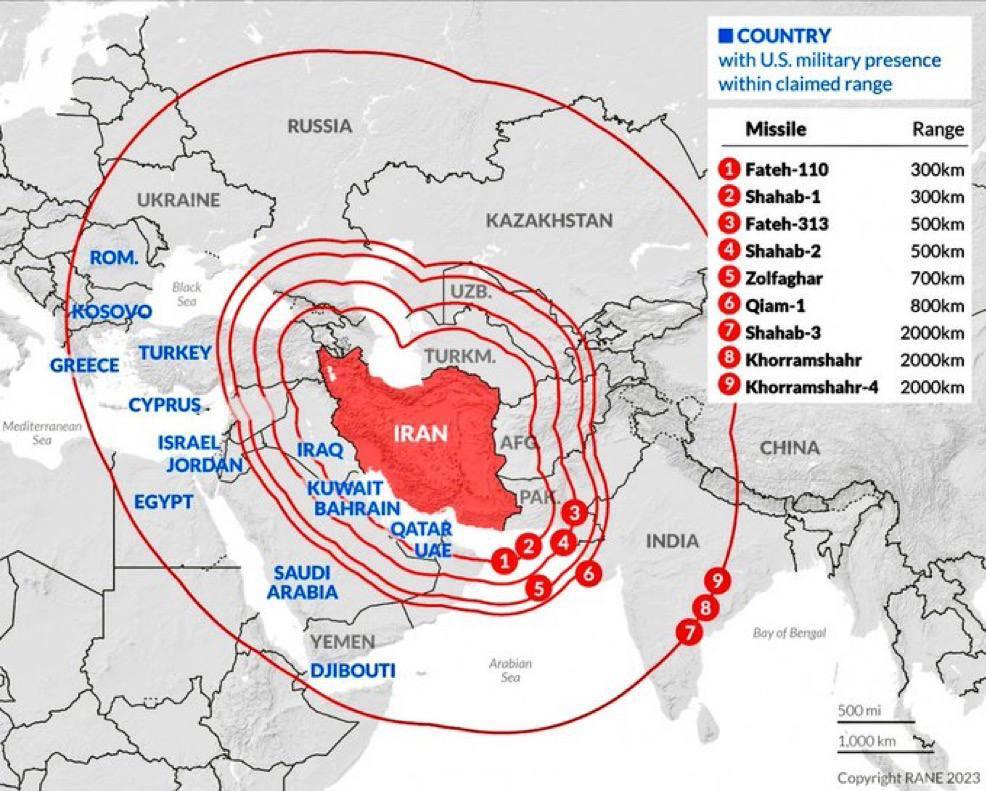
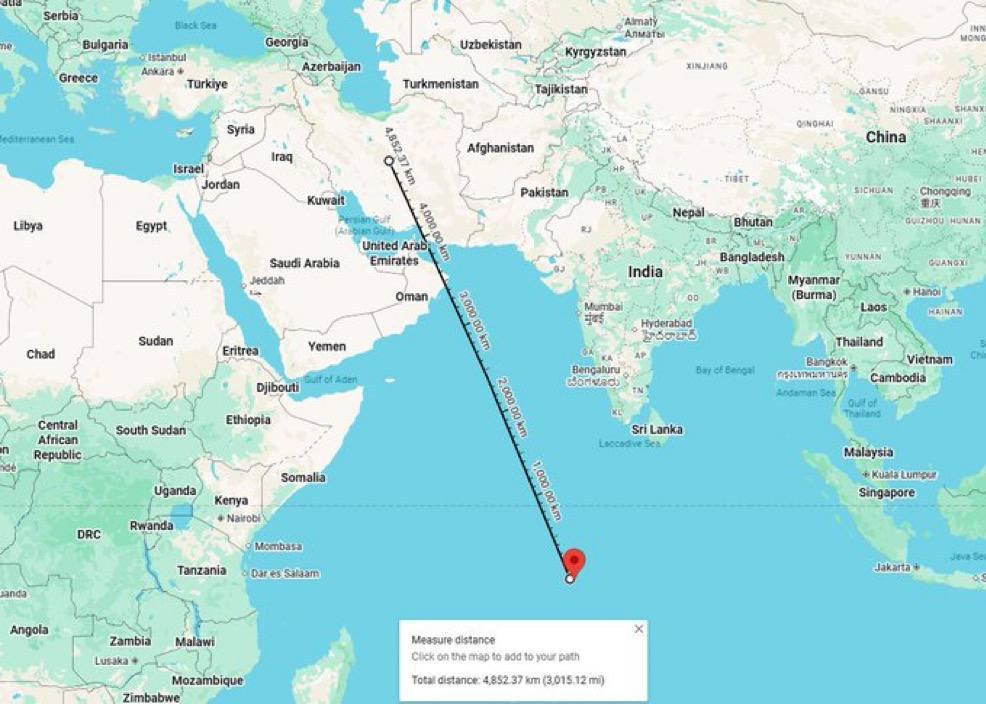
By authorising IRGC to fire an intermediate ballistic missile toward a military base about 4,000 kilometers south of Iran, the remnant leaders in Tehran sent a clear message that Europe could be next. The attack on the US/UK base in Diego Garcia was unsuccessful, with one missile falling short and another intercepted. Although neither missile hit the base, the attack demonstrated that Tehran has developed aerospace weapons with range of 4,000 kilometers that could threaten Europe, Africa and Asia. Tehran is no longer restrained by Iranian Foreign Minister Abbas Araghchi who said in February 2026 that Iran had deliberately limited its missile range to 2,000 kilometers.
The Context
The western security and intelligence community has assessed that Iran’s now dismantled space program launched satellites using technology that could also be adapted for long-range ballistic missiles.[2]
The IRGC – Quds Force that had supported both Sunni and Shi’ite proxies and conducted terrorist attacks worldwide warned that it will target enemies globally—including officials, pilots, and soldiers—even in civilian locations like resorts and tourist areas, saying “no place in the world will be safe for you.” In a statement, shared by the state-controlled Fars news agency IRGC stated that it is ‘keeping an eye’ on the ‘cowardly’ soldiers.
A senior spokesperson said that while Tehran’s officials and authorities live with the people, America and Israel’s ‘hide in underground bunkers’ and ‘use the people as a human shield’.[3] The statement added, “We are monitoring your cowardly officials and commanders, your treacherous pilots and soldiers, and with our resolve, while continuing our powerful and crushing past attacks against you, the time will not be long until we drag you out of your hiding places and shelters in disgrace and humiliation to punish you for your heinous actions.” The statement concluded, with the remark, “From now on, based on the information we have on you, no place in the world will be safe for you, not even amusement parks, recreational centres, and tourist resorts.” In reality, there has been no change in the mindset of the Iranian regime. The only difference is that the Iranian regime openly threatens its adversaries, opponents and enemies.
Background
From Diego García, the US launched its B-2 bombers carrying the GBU-57 Massive Ordnance Penetrator weighing 30,000 pounds targeted Iran’s twelve underground fissile and missile capabilities in Zagros Mountain. These sites are considered a crucial element of Iran’s deterrence strategy, designed to survive first-strike attacks. Iran’s mountain fortress strategy protects its nuclear and missile facilities. Also termed Pickaxe Mountain, Zagros Mountain has a fortified facility designed to house enriched uranium. This site is buried under hundreds of feet of solid rock. Likewise, IRGC has constructed hidden underground “missile cities” with tunnels serving as storage, transportation, and launch sites for missiles, often utilizing rail systems for movement. The mountains are also known to contain hidden facilities for advanced drones.
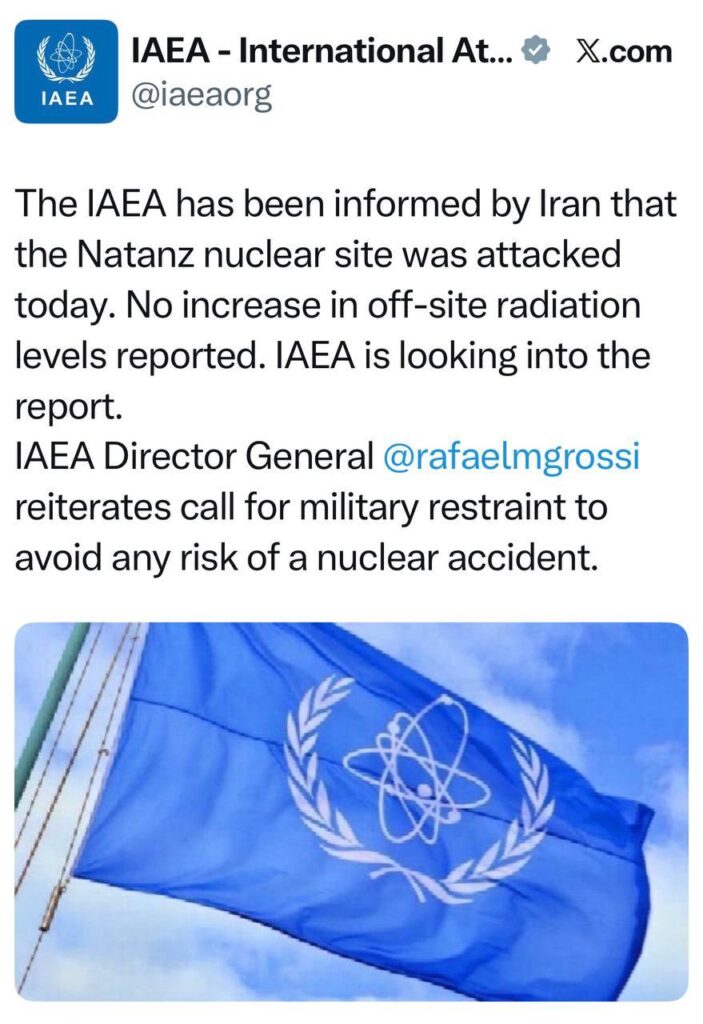
The Zagros range is used to protect against bunker-buster bombs, as the limestone and metamorphic rock make digging deep, protected tunnels effective, complementing Iran’s strategy of using geography as a “silent weapon”.
To strike Iran’s most protected fissile and missile infrastructure in Zagros Mountains, B2 entered the Iranian airspace undetected, and fired into the mountain. A defence analyst, Shanaka Anslem Perera, said, “The largest non-nuclear bomb in the American arsenal, developed at a cost of $330 million over a decade of classified engineering, built for a single strategic purpose: to reach what Iran spent fifteen years burying beneath mountains. The B-2 Spirit is the only aircraft on earth capable of delivering it. Four of them flew from Diego Garcia. Twelve Iranian underground missile complexes have been struck.”[4]
Understanding the Threat
The US/Israel intervened in Iran to disrupt IRGC’s fissile, missile and terrorist proxy programs. To strike Diego Garcia, it is likely that Iran used the Khorramshahr-4 missiles with a reduced warhead to extend range – lowering payload weight and increasing fuel capacity.
The original warhead of the Khorramshahr is large – around 1,500 kg – allowing significant flexibility in weight-range tradeoffs.
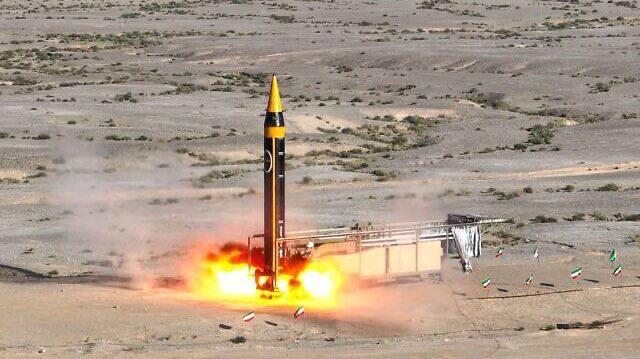
Also known as Kheibar, it is one of Iran’s most advanced missile systems. A medium-range ballistic missile (MRBM), Khorramshahr was officially unveiled in May 2023. Designed for high-payload capacity and rapid deployment, it was widely believed to have a 2,000 km range with a 1,500–1,800 kg warhead. However, by reducing the warhead size, the missile’s range was likely extended to 3,000–4,000 km.
Khorramshahr missile was launched toward Israel for the first time in the current campaign on March 5, 2026. However, Israel responded effectively. Most other countries do not have the capacity of Israel to defend themselves.
The IRGC has steadfastly progressed in building its aerospace weapons. Had US/Israel not intervened on February 28, 2026, would IRGC have moved towards building weapons with greater capabilities? Could IRGC have built an Intercontinental Ballistic Missile, a guided ballistic missile designed for nuclear weapons delivery with a minimum range of 5,500 kilometres capable of traveling between continents.
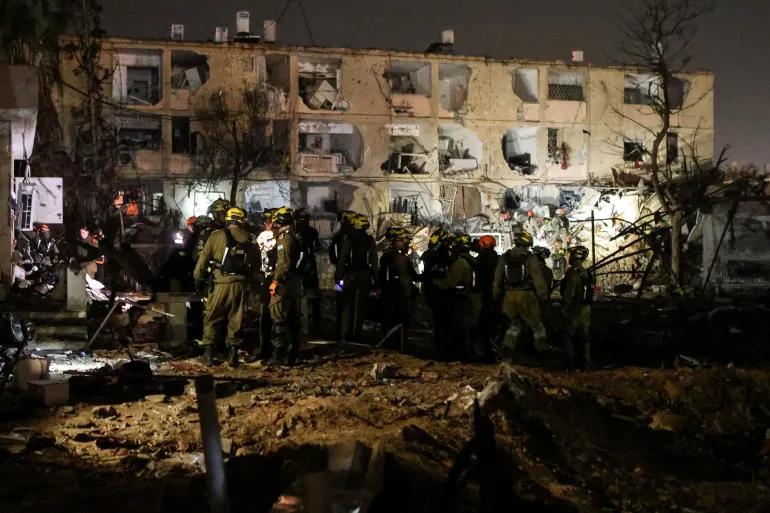
IRGC attack on Arad March 22, 2026
Footage from Home Front Command activity at the impact site in southern Israel
Search and rescue forces are operating at the site in southern Israel where reports of impact have been received, conducting searches and providing civilian assistance at the scene.
Israeli Air Force helicopters were dispatched to the scene to assist the civilian population in the area.
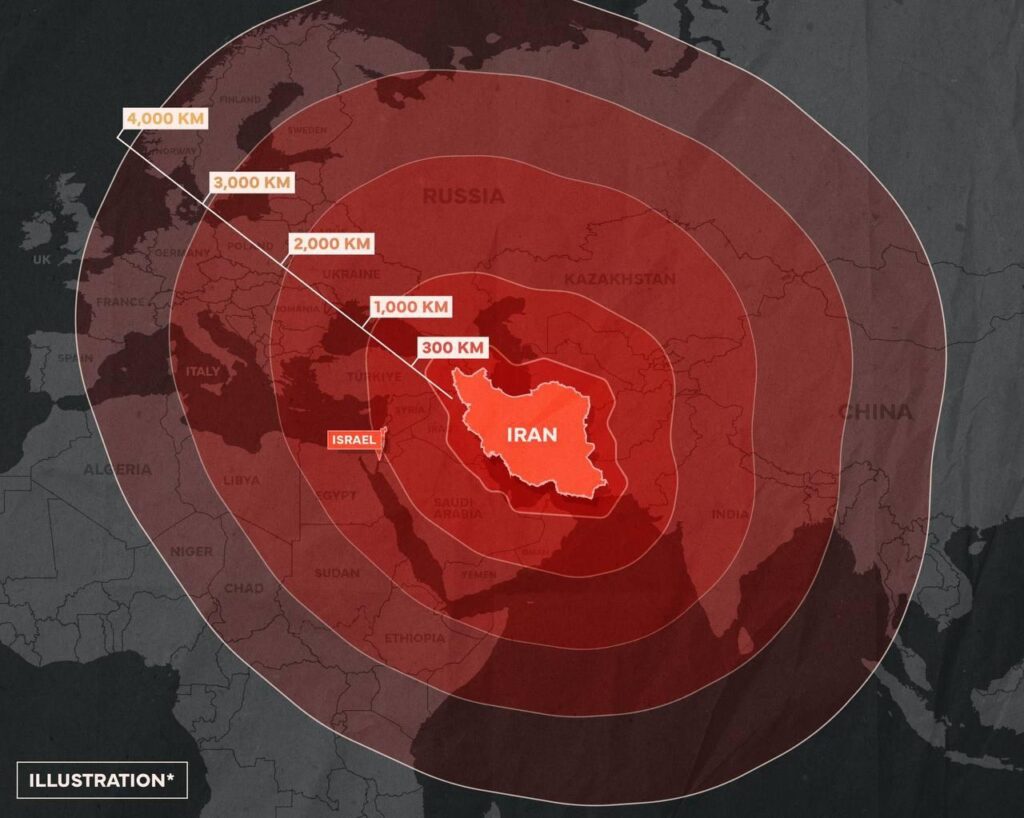
Unless its capabilities are dismantled and the organisation is decimated, IRGC is even likely to build a long-range ballistic missile that could threaten the U.S. East Coast and major population centers such as New York, Washington, and Boston. In the light of IRGC emerging as the key decision maker in Tehran, Iran’s neighbours especially the Gulf countries should play a frontline role in responding to an insidious and a looming threat.
The Future
The question is will the Iranian regime use the ultimate weapon? Will IRGC exploit its arsenal of chemical, biological and radiological weapons to target the Gulf and beyond?
With the attempted strike on Diego Garcia, Iran’s radius of deterrence, defense, and fear has expanded dramatically. The aerospace weapon fired is not a medium-range but an intermediate-range ballistic missile. Depending on launch point and payload, the missile could strike Paris, Addis Ababa, Delhi, Dhaka, Colombo and even parts of China.
Conclusion
If anyone had doubts that the Iranian regime was engaged in terrorism, Tehran’s conduct after the Middle East War erupted on February 28, 2026 has demonstrated adequately its preponderant use of terrorism. Using aerospace weapons – missiles, drones and rockets – the Iranian regime has mounted attacks on 12 countries in the neighbourhood mostly against civilian targets.
The IRGC has consolidated its position as the primary controller of Iran’s military technology and offensive capabilities. The IRGC has been building both weapons and delivery systems. IRGC Aerospace Force has steadfastly advanced both ballistic and cruise missile as well as drone delivery systems. The IRGC has pursued a strategy of developing these dual-use technologies, which can carry conventional or potentially nuclear payloads, in tandem to diversify its arsenel.
If the current regime in Iran survives, it will share these capabilities with its proxies. However, the key decision maker is the IRGC, Iran’s largest military, security, intelligence and administrative entity. It is entrenched in government and embedded in the population. Armin Soleimani, a Middle East analyst wrote, “The key question, therefore, is not only how much firepower the IRGC still commands. The more important question is whether an institution that grew for decades through structural corruption, monopolistic privilege, and regional adventurism can simultaneously manage the country, the economy, the home front, and the external battlefield in a prolonged war. The available evidence suggests that this model of IRGC-centered rule is now under greater pressure than at any time in its history.”[5]
The time is right for the international community to unite to dismantle IRGC’s fissile, missile and terrorist proxy programs.
—
Prof. Rohan Gunaratna is editor of a Handbook of Terrorism in the Middle East. He was visiting fellow of Washington Institute for Near East Policy. He travelled extensively in the Middle East including a brief visit to Tehran.
[1] https://www.wsj.com/livecoverage/iran-us-israel-war-updates-2026/card/iran-targeted-diego-garcia-base-with-ballistic-missiles-rb7MdZW1CfwRTauDYHOt
[2] https://www.ynetnews.com/article/h1ua0k29zg#google_vignette
[3] https://metro.co.uk/2026/03/20/worlds-tourist-attractions-not-safe-us-israeli-officials-iran-army-warns-27556260/amp/
[4] https://x.com/shanaka86/status/2029744626811412820
[5] https://nowlebanon.com/the-irgc-how-a-security-economic-empire-became-both-the-pillar-of-survival-and-the-achilles-heel-of-a-regime/