
By Rohan Gunaratna
Introduction
On January 19, 2026, thousands of Islamic State prisoners escaped from two facilities controlled by the Kurdish-led Syrian Democratic Forces (SDF). The SDF was the dominant force in the region and the key US partner in defeating the Islamic State in 2019.
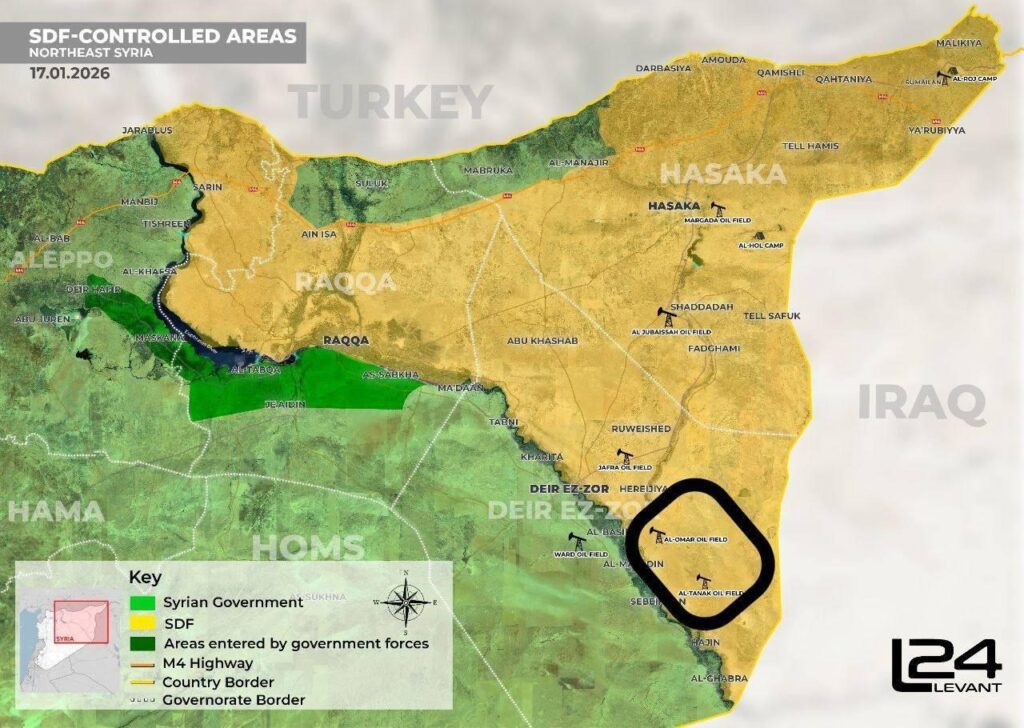
The balance of power in northeastern Syria shifted in January 2026 after SDF withdrew and the new Syrian government took control of both Raqqa and Deir al-Zor – two Arab-majority provinces where Syria’s main oil fields are located.
During the SDF confrontation with the Syrian Armed Forces led by Ahmed Al Sharaa alias Abu Mohamed Al Jolaani, the prisoners escaped. The two prisons are (1) Shaddadi prison in Hasaka in Syria’s northeast and (2) Al-Aqtan prison on the outskirts of the city of Raqqa, the former capital of the Islamic State.
The SDF described the clashes as a “highly dangerous development” and said government forces seizing the prison “could have serious security repercussions that threaten stability and pave the way for a return to chaos and terrorism”.
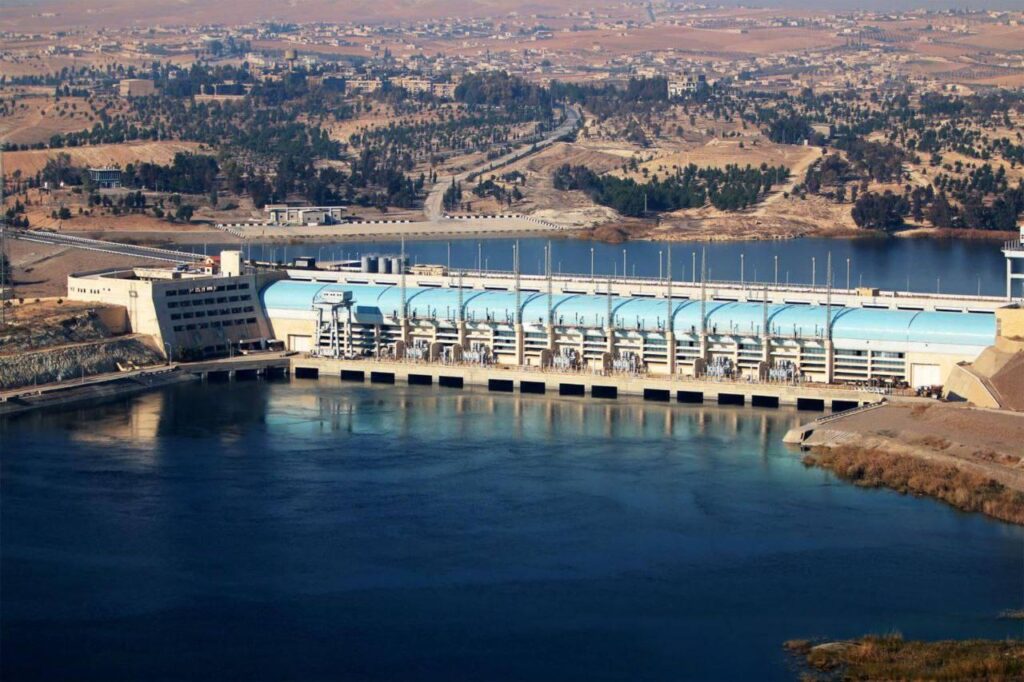
Several thousand terrorists escaped when the Syrian Armed Forces advanced. The Syrian Armed Forces consisting of Hay’at Tahrir al-Sham, Al Qaeda, other jihad groups seek to integrate SDF into its structure. While the Al Shaddadi prison held 2000 female prisoners, Al-Aqtan held 7-8000 male prisoners.
The prison population includes foreign fighters including some of the most dangerous Islamic State leaders and members.
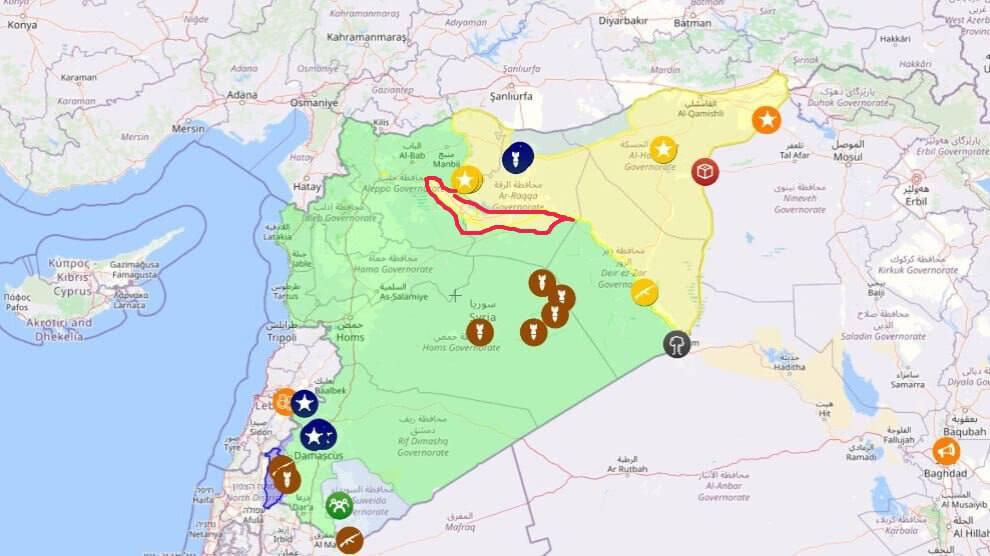
The Context
During the fight with the Syrian Armed Forces, the SDF announced that it lost control of Shaddadi Prison in Hasakah governorate, noting that it holds “thousands” of Islamic State inmates, and warned that it may soon lose al-Aqtan prison in Raqqah. The SDF Press Center issued two statements in Arabic and English on January 19, 2026, addressing the latest developments as they relate to the jails. In each, the SDF remarked that U.S.-led coalition troops did not intervene or take “practical steps” to contain the prisoners or prevent breaches at the facilities, and concerning Shaddadi Prison in particular, framed the battles and the desire for the coalition’s participation as “an effort to prevent a serious security catastrophe.”
Following is a copy of the messages produced by SITE Intelligence Group, a US service that monitors threat activity online.
Statement to the Public Regarding the Recent Developments at Al-Shaddadi Prison
Since the early hours of this morning, Al-Shaddadi Prison, which holds thousands of detainees from the terrorist organization ISIS, has been subjected to repeated attacks carried out by factions affiliated with Damascus.
Fighters of the Syrian Democratic Forces confronted these attacks and succeeded in repelling them several times, resulting in the martyrdom of dozens of our fighters and the injury of others, in an effort to prevent a serious security catastrophe.
Although Al-Shaddadi Prison is located approximately two kilometers from the International Coalition base in the area, the base did not intervene, despite repeated calls for intervention.
Accordingly, we inform public opinion that Al-Shaddadi Prison has currently fallen outside the control of our forces as a result of these developments.
Media Center of the Syrian Democratic Forces; 19 January 2026
Statement to the Public Regarding the Recent Developments at “Al-Aqtan” Prison in Raqqa
For the past three days, our forces have been coordinating with the International Coalition to transfer ISIS detainees held at “Al-Aqtan” Prison in the city of Raqqa to safe locations. However, despite repeated promises, the Coalition has so far taken no practical steps in this regard.
During the ongoing clashes with Damascus-affiliated factions, which are launching attacks on the prison, our forces have continued to carry out their duty to protect the prison and prevent a breakdown of security. As of the time of issuing this statement, these clashes have resulted in the martyrdom of 9 of our fighters and the injury of 20 others.
Clashes are still ongoing at this time, amid extremely dangerous security conditions.
Media Center of the Syrian Democratic Forces; 19 January 2026
Islamic State Prisoners
The Syrian Armed Forces took the responsibility to secure al-Shaddadi prison, where Islamic State prisoners are held in the northeastern Hasakah province.
The Syrian Armed Forces have deployed in strength in al-Shaddadi city and its environs south of Hasakah to fight SDF. In response to the Islamic State prisoner escape, Syrian Armed Forces said,
“Army forces have begun entering the city after the SDF released ISIS elements from al-Shaddadi prison.”
The operational command of the Syrian Armed Forces explained that they contacted US mediators and SDF leaders “to hand over the al-Shaddadi prison to the internal security forces to secure it and its surroundings, but the SDF leadership rejected this and continues to do so until this moment.”
The Syrian Armed Forces held the SDF “fully responsible for releasing ISIS elements from al-Shaddadi prison,” vowing to take the necessary measures “to reestablish control over the area.”
Separately, the Syrian government said it “categorically rejects any attempt to use the terrorism file as a tool of political or security blackmail.” It accused the so-called “Autonomous Administration,” the governing arm of the SDF, of “political exploitation of the terrorism card and a form of security pressure and blackmail.”
The Syrian Armed Forces including HTS, Al Qaeda and other jihad groups kidnapped Kurdish women including SDF members on January 18-19, 2026. Unless the jihadists are reformed, the atrocities by their rank and file serving in the Syrian Armed Forces against Syria’s minorities will continue.
After the Syrian Armed Forces consisting of HTS, Al Qaeda and other Jihad groups vandalised SDF monuments, Kurds in Syria’s northeast view Damascus as an enemy. Syrian Armed Forces tear down a Women’s Protection Units (YPJ) (Kurdish women forces) statue in northeastern Syria.
This is the end of the autonomous Kurdish-led region in Syria, which existed for a decade. After the US built relations with the new Syrian leader Ahmed Al Sharaa, Washington withdrew its support from the SDF, the vanguard that defeated the Islamic State in 2019.
The Syrian Armed Forces called efforts to link law-enforcement measures and the restoration of state authority to the risk of activating terrorist cells “a blatant attempt to distort facts and inflame conflict in order to preserve an authority imposed by force.”
Damascus affirmed, through its military and security institutions, its “full readiness to carry out its duties in combating terrorism within the framework of international efforts to eliminate ISIS,” pledging to “secure all detention centers in accordance with internationally recognized standards.”
It warned the SDF against “any reckless steps that could facilitate the escape of ISIS detainees or the opening of prisons as a means of political pressure.”
“Any security breach in these prisons will be the direct responsibility of the party currently controlling them,” it said.
Integrating SDF into the Syrian Administration
Syria’s President Ahmad al-Sharaa announced a ceasefire and an agreement for the full integration of the SDF into state institutions.
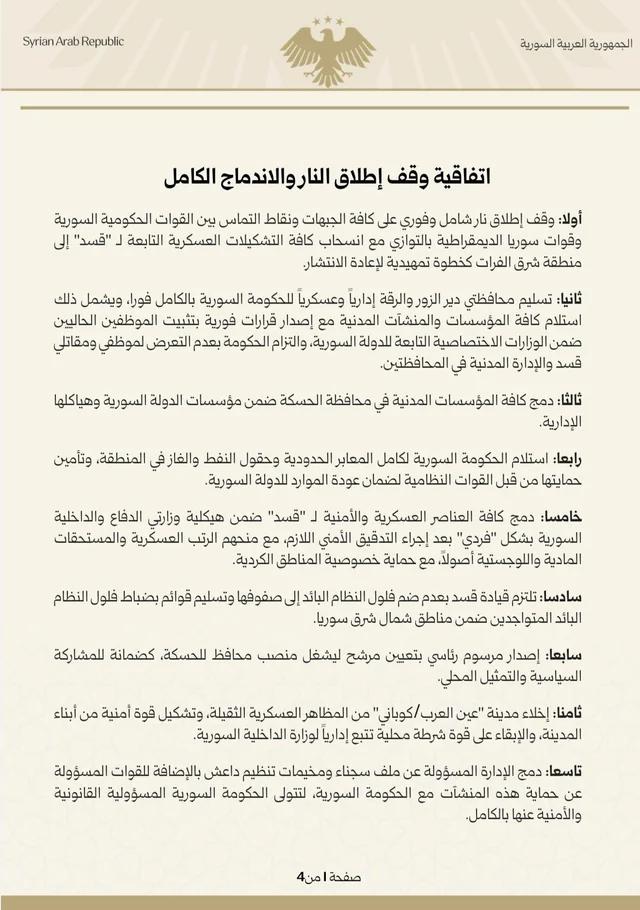
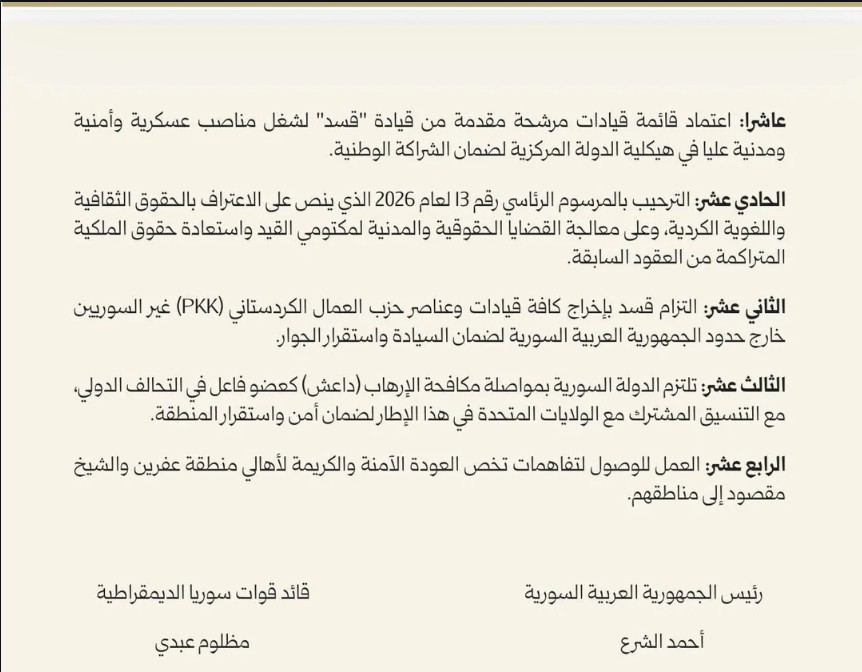
“FULL TEXT OF SYRIA – SDF DEAL (translated from Arabic to English)
Ceasefire and Full Integration Agreement
1: A comprehensive and immediate ceasefire on all fronts and points of contact between the Syrian government forces and the Syrian Democratic Forces (SDF), in parallel with the withdrawal of all SDF military formations to the area east of the Euphrates as a preliminary step for redeployment.
2: The immediate and complete administrative and military handover of the governorates of Deir ez-Zor and Raqqa to the Syrian government. This includes the handover of all civilian institutions and facilities, with the immediate issuance of decrees to confirm the employment of current staff within the relevant ministries of the Syrian state. The government commits to not targeting SDF employees and fighters, or the civilian administration in the two governorates.
3: The integration of all civilian institutions in the Hasakah governorate into the Syrian state institutions and administrative structures.
4: The Syrian government’s takeover of all border crossings and oil and gas fields in the region, and their protection by regular forces to ensure the return of resources to the Syrian state
5: Integrating all military and security elements of the SDF into the structures of the Syrian Ministries of Defense and Interior on an individual basis, after conducting the necessary security vetting, while granting them military ranks and the corresponding financial and logistical entitlements, and protecting the autonomy of the Kurdish regions.
6: The SDF leadership commits to not incorporating remnants of the former regime into its ranks and to submitting lists of officers from the remnants of the former regime present in the areas of northeastern Syria.
7: Issuing a presidential decree appointing a candidate to the position of governor of Hasakah, as a guarantee of political participation and local representation.
8: Removing the heavy military presence from the city of Ain al-Arab/Kobani, forming a security force from the city’s residents, and maintaining a local police force administratively subordinate to the Syrian Ministry of Interior.
9: Integrating the administration responsible for the file of ISIS prisoners and camps, in addition to the forces responsible for protecting these facilities, with the Syrian government, so that the Syrian government assumes full legal and security responsibility for them.
10: Adopting the list of nominated leaders submitted by the SDF leadership to fill senior military, security, and civilian positions in the central state structure to ensure national partnership.
11: Welcoming Presidential Decree No. 13 of 2026, which stipulates the recognition of Kurdish cultural and linguistic rights, and addresses the legal and civil issues of unregistered persons and the restoration of property rights accumulated from previous decades.
12: The SDF commits to expelling all non-Syrian leaders and members of the PKK from the borders of the Syrian Arab Republic to ensure sovereignty and the stability of the region.
13: The Syrian state commits to continuing the fight against terrorism (ISIS) as an active member of the international coalition, in joint coordination with the United States in this regard, to ensure the security and stability of the region.
14: Working to reach understandings regarding the safe and dignified return of the residents of the Afrin and Sheikh Maqsoud areas to their homes.
President of the Syrian Arab Republic
Ahmed al-Sharaa
Commander of the Syrian Democratic Forces
Mazloum Abdi”
Under the deal, the SDF will withdraw its military formations east of the Euphrates River and hand over administrative and security control of Raqqa and Deir ez-Zor, the two Arab provinces to the Syrian state.
The agreement also provides for the integration of SDF military and security personnel into the Syrian ministries of defense and interior following individual security vetting, as well as the transfer of border crossings, oil and gas fields, and civilian institutions to government control.
The announcement followed a military operation launched by the Syrian Armed Forces, through which it regained wide areas in eastern and northeastern Syria. Damascus said it used force after repeated violations by SDF of earlier agreements signed with Damascus a year ago.

A New Threat Landscape
In northeastern Syria, SDF held 46,500 Islamic State detainees, a majority of whom are women and children. They were classified as ‘internally displaced persons’. Under SDF control, they resided in a high security, fenced, and guarded environment. While 94% are women and children, the population consisted primarily of Iraqis (17,600 or 44%), Syrians (16,000 or 40%), and over 8,000 foreign nationals from 60 other countries.
The “Annex”, a separate, highly secured section of the camp held about 1,250 families (6,000 women and children) from third countries, considered the most radicalized.
Following the fall of the Assad government in 2025, there were accelerated efforts to repatriate Iraqi citizens and return Syrians to their homes, with plans to potentially empty the camp complex.
In addition, the SDF held 9,000–10,000 male Islamic State fighters in separate, heavily guarded detention facilities in the region. As there was an international failure to build a proper rehabilitation program, they remain radicalised. Their release without rehabilitation poses a long term threat to the security and peace of the world.
Conclusion
Syrian government troops tightened their grip across Syria’s northern and eastern territory on January 19, 2026 after SDF withdrew on January 18, 2026. The dramatic shift consolidated President Ahmed al-Sharaa’s rule and Syrian Armed Forces exercising control. The government internal security forces and military police consist of the HTS, Al Qaeda and other jihad groups. They were supported by the Arab tribes that the SDF claimed advanced ahead of the Syrian Armed Forces and released the prisoners. The SDF allegation that before the Syrian Armed Forces advanced to the territory controlled by SDF, the Arab tribes releasing the prisoners needs to be investigated. What exactly happened on the ground is not clear but appropriate measures needs to taken to prevent the resurgence of the Islamic State at its core – Syria.
On January 18, 2026, the responsibility for prisons housing Islamic State detainees was transferred to the Syrian government. After days of fighting with Syrian Armed Forces, the SDF, withdrew from two Arab-majority provinces they had controlled for years, including oil fields on January 19, 2026. Unless SDF and the Syrian government work together, the threat to Syria, the region and the world will grow. Amidst discord between SDF and the Syrian Armed Forces, the Islamic State, the world’s most dangerous terrorist group, will revive.
Rohan Gunaratna is the author of the book Inside Al Qaeda: Global Network of Terror. He debriefed Al Qaeda and Islamic State leaders. He is a trainer of law enforcement, national security and military counter terrorism units; and is the author and editor of 30 books.