By Rohan Gunaratna
Introduction
Iran was developing a military nuclear program that would set off an arms race in the Middle East and beyond. Iran was developing missile capabilities that threatened both the Gulf and beyond. Iran’s Islamic Revolutionary Guard Corps (IRGC) was developing partners and proxies to threaten the continent and the world. The U.S. response came at a high price. The cost varies widely, but what exactly is the price of security?
The Context
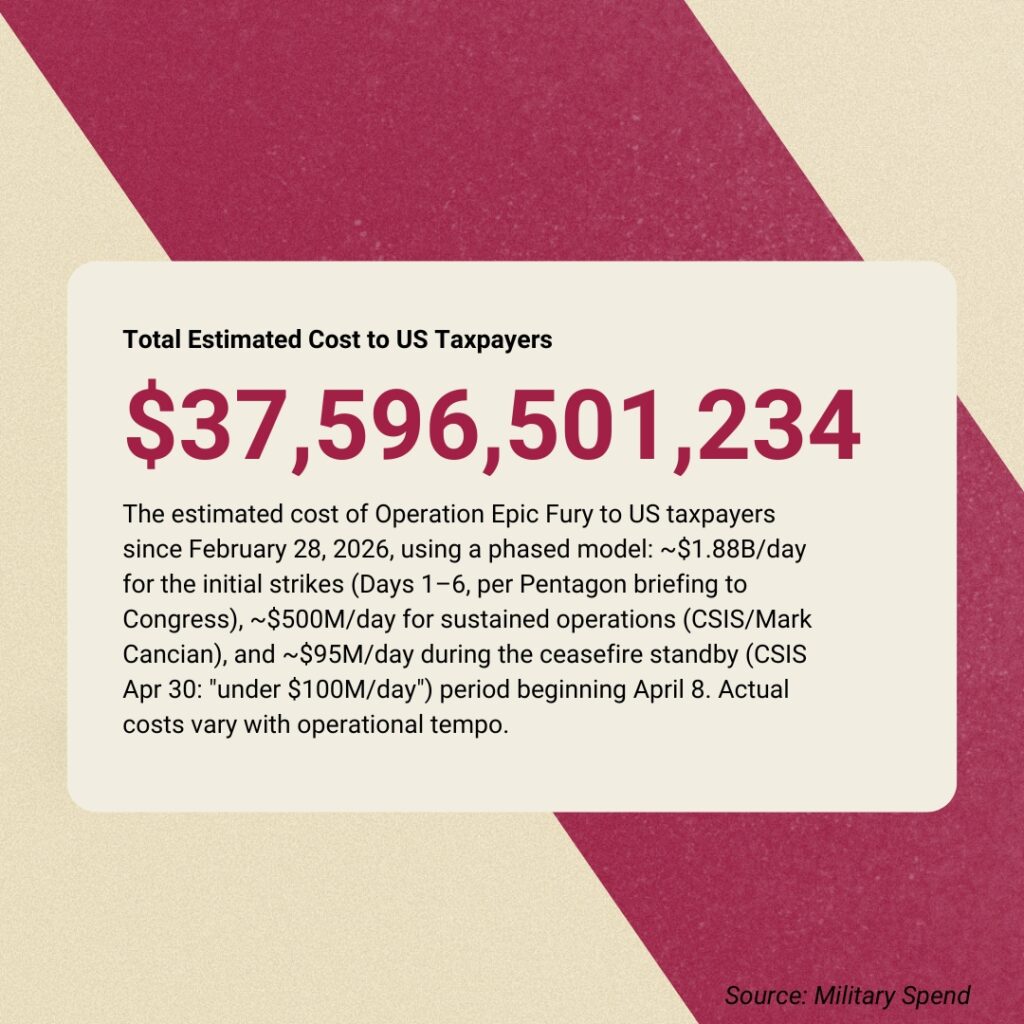
The Department of Defense officially cites $29 billion in direct operational and munitions expenses. However, independent estimates from defense experts and economists place the true taxpayer and economic burden between $100 billion and $1 trillion.
The Department of War’s official accounting is $29 billion, heavily driven by expended munitions (e.g., Tomahawk missiles at $2.6 million each and THAAD interceptors up to $12 million). Internal defense estimates from officials place the Pentagon cost closer to $80 billion to $100 billion when factoring in damaged U.S. base repairs and aircraft replacements. The Center for Strategic and International Studies (CSIS) has pegged the Pentagon’s direct burden closer to $40 billion.
Background
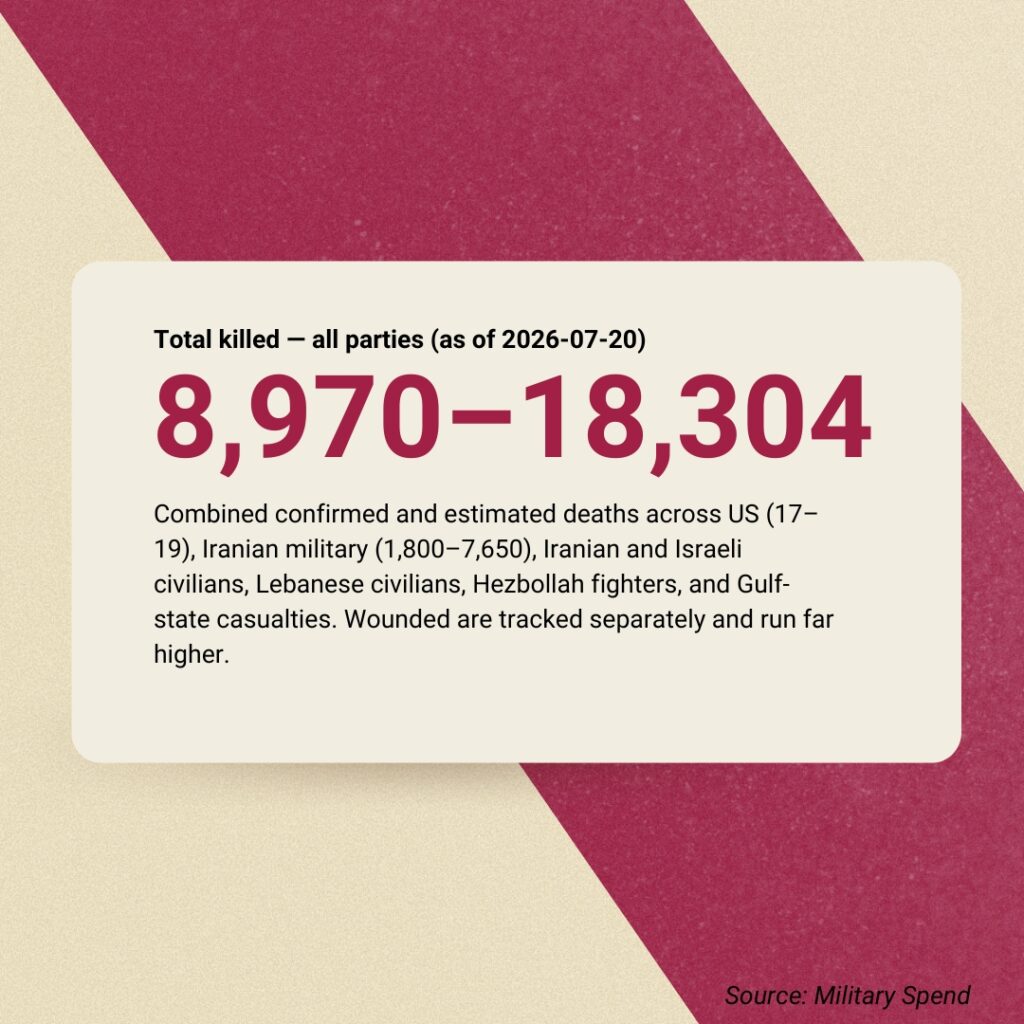
In the ongoing U.S.-Iran conflict, the Pentagon confirms 14 U.S. service members have been killed and over 400 wounded. The vast majority of American casualties stem from Iranian retaliatory strikes on regional bases and aircraft crashes. Across all factions, the war has claimed between 8,000 and 18,000 lives. Iranian authorities report at least 3,500 people killed (mostly civilians) and over 26,500 injured in U.S. and Israeli airstrikes. Over 4,000 casualties have been reported by the Lebanese Health Ministry amid fighting between Israel and Hezbollah. At least 70 people have been killed and thousands wounded by Iranian missile attacks and border clashes.
The Future
The U.S.-Iran war will last for several months. The conflict’s disruption to oil infrastructure and the Strait of Hormuz drove up global energy prices. Economists from the Center for American Progress estimate Americans paid tens of billions in extra costs for gas and diesel. Moody’s Analytics estimates the war’s overall cost to U.S. consumers—encompassing higher prices at the pump, increased borrowing costs, and elevated inflation—totals roughly $132 billion, which averages out to over $1,000 per American household.
Conclusion
When accounting for the “long tail” of war costs, including restocking supplies, replacing destroyed hardware, and the lifetime healthcare and disability benefits for veterans over the next decade—leading public finance experts like Harvard’s Linda Bilmes warn that the aggregate economic impact could surpass $1 trillion.
Iran seeks to be a continental power. Run by IRGC, Iran today is unlikely to end its military nuclear program, curb its missile program, and end its partner and proxy program.
—
Rohan Gunaratna is a professor of Security Studies at the S. Rajaratnam School of International Studies at the Nanyang Technological University. He is a trainer for law enforcement, national security and military counter terrorism units; and is the author and editor of over 30 books.