By Rohan Gunaratna
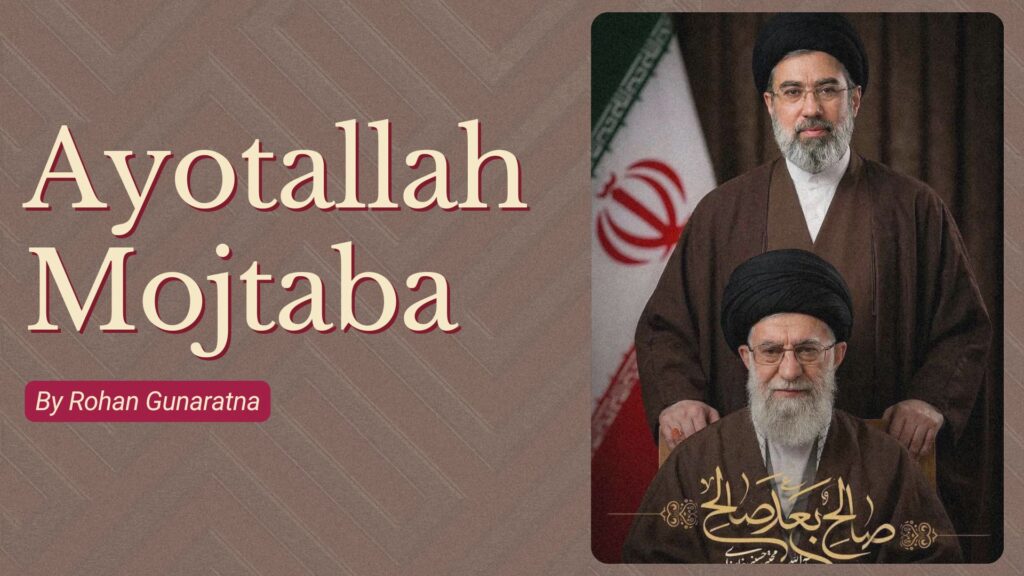
Mojtaba Khamenei was chosen as Iran’s spiritual, political and the military leader of Iran after his father Ayatollah Ali Khamenei was killed on Feb 28, 2026. Iran’s top clerical body, the Assembly of Experts, issued a statement shortly after midnight on March 9 in Iran.
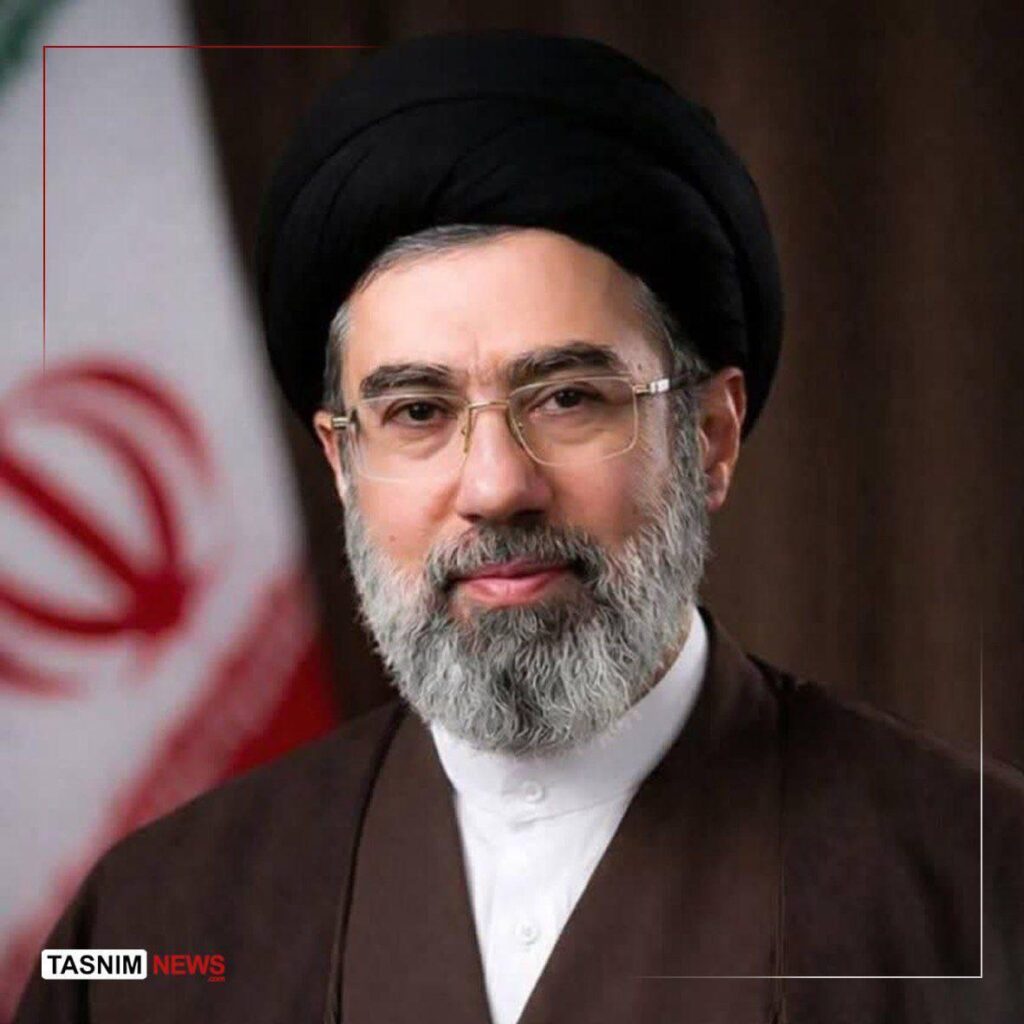
Born on 8 September 1969 in the north-eastern city of Mashhad, Mojtaba is the second of Ali Khamenei’s six children. Educated in theology in the holy city of Qom, his selection could still prove controversial as Mojtaba is only a mid-ranking cleric. He joined the Islamic Revolutionary Guard Corps (IRGC) in 1987 and served in the Iran–Iraq War. He controlled the Basij, the paramilitary force that targeted the protesters in 2009.
In the opening strike by Israel on Iran on February 28, 2026, Mojtaba lost his father, mother, wife, son, niece, nephew, sister and brother in law.
Mojtaba was Deputy Chief of Staff to the Supreme Leader (Political and Security Affairs) from 21 August 2008– 8 March 2026. It was a public position but not an official position and he has kept a low profile by neither holding government office nor giving public speeches.
He was the key link between the clerical establishment and the IRGC, Iran’s largest military, security and intelligence organisation. Determined to build a functional nuclear weapon, he was close to the leadership of IRGC. This is certified in a US diplomatic cable describing him as “the power behind the robes” who was widely regarded as a “capable and forceful” figure within the regime.
The U.S. and Israeli governments have designated Mojtaba as the highest ranking target for elimination. Mojtaba was designated by the U.S. government on November 4, 2019. “The Supreme Leader has delegated a part of his leadership responsibilities to Mojtaba Khamenei, who worked closely with the commander of the Islamic Revolutionary Guard Corps-Qods Force (IRGC-QF) and also the Basij Resistance Force (Basij) to advance his father’s destabilizing regional ambitions and oppressive domestic objectives.
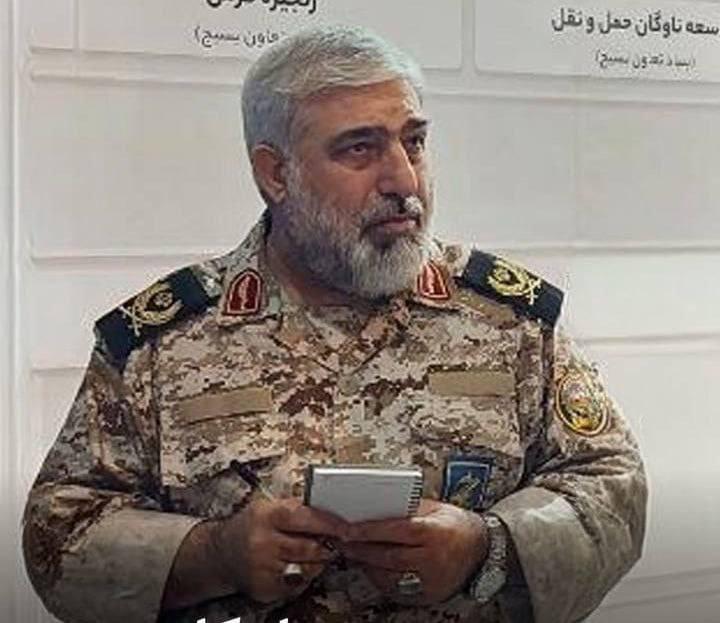
The IRGC-QF is designated pursuant to Treasury’s counterterrorism authority (E.O. 13224) and as a Foreign Terrorist Organization, while the Basij is designated pursuant to both E.O. 13224 and Treasury’s human rights designation authority (E.O. 13553).”[1]
With the announcement of the new leader on March 9, 2026, the residents of Tehran were divided. Some support Ayatollah Mojtaba and others started to chant “Death to Mojtaba.”
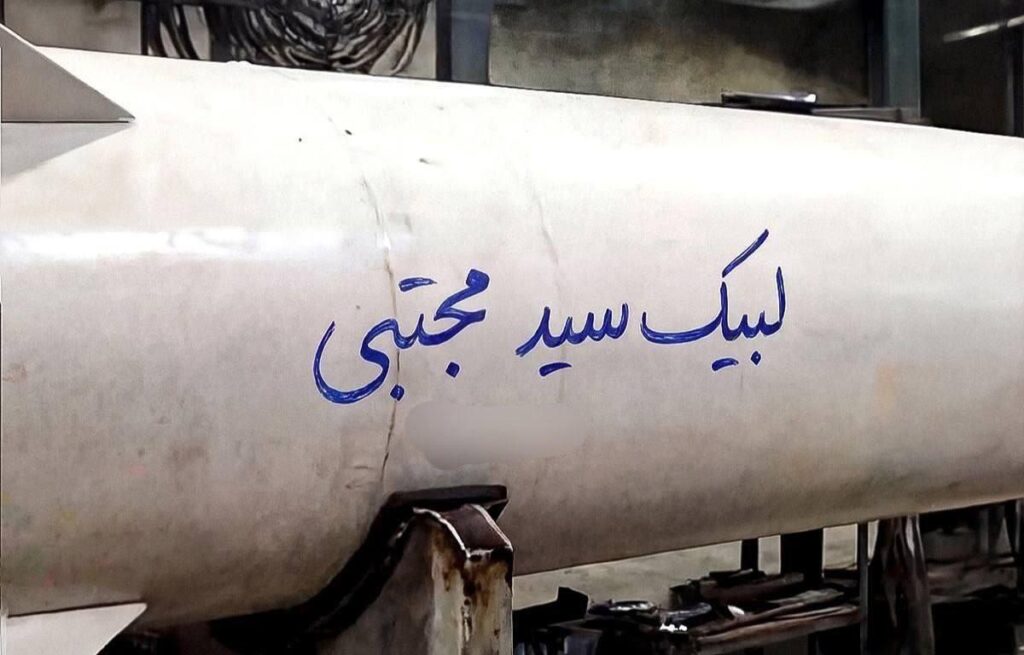
The Revolutionary Guards in an official statement: “Ready to obey fully and sacrifice ourselves at the command of the Supreme Leader Mojtaba Khamenei”
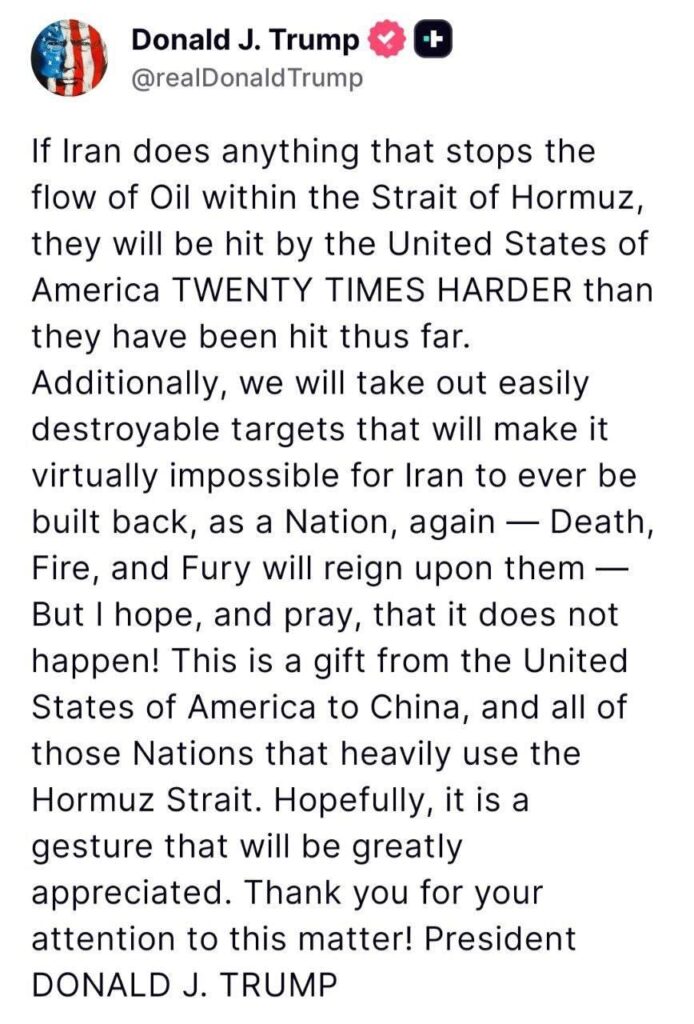
The appointment of Mojtaba has already heightened tensions between Tehran and Washington. Furthermore, the oil and gas prices have spiked following the closing of the Strait of Hormuz.
The US and Israel continued to strikes regime targets in Iran, Mar 9, 2026, IDF stated: The IDF struck missile launch sites and Basij and Internal Security command centers. The IDF continues to deepen the damage to all arrays and capabilities of the Iranian terror regime.
President Trump has issued a stark warning to Mojtaba Khamenei, Iran’s newly selected Supreme Leader.
“He’s going to have to get approval from us… If he doesn’t get approval from us, he’s not going to last long.” Trump made the remarks in an interview while discussing the succession crisis in Tehran following the death of Iran’s previous Supreme Leader during U.S.–Israeli strikes.
The Israeli Air Force, acting on IDF intelligence, completed an additional wave of strikes on infrastructure across Iran belonging to the Iranian regime. As part of the strikes, the IDF struck a rocket engine production facility and several long-range ballistic missiles launch sites that were prepared for launch toward the State of Israel.
Simultaneously, the IDF continues to deepen the damage to military infrastructure belonging to Internal Security and the Basij, among the infrastructures struck were: The headquarters of the Iranian regime’s regional corps, the Internal Security forces command center of the Iranian regime in Isfahan, an additional base used by the IRGC and Basij, and the IRGC’s police headquarters.
The Internal Security and Basij forces constitute part of the Iranian armed forces that are subject to the Iranian terror regime, and have for years advanced terror activity. The forces constitute a central arm in the repression of the Iranian civilian population and are responsible for the use of brutal and systematic violence against it.
The strikes were completed as part of the phase of deepening the damage to the core arrays and foundations of the Iranian regime.
After Khamenei’s death, there was no significant change in the policy and strategy of the new leadership. The Iranian regime continued to strike the neighbouring countries. The U.S. and Israel also responded with strikes.
The future leadership of Iran is now unfolding under the shadow of an escalating war.
—
Prof. Rohan Gunaratna is editor of a Handbook of Terrorism in the Middle East. He was visiting fellow of Washington Institute for Near East Policy. He travelled extensively in the Middle East including a brief visit to Tehran.
[1] Treasury Designates Supreme Leader of Iran’s Inner Circle Responsible for Advancing Regime’s Domestic and Foreign Oppression, https://home.treasury.gov/news/press-releases/sm824