
By Rohan Gunaratna
Introduction
To understand President Donald J. Trump’s volatile foreign policy, there is no better document than the “2026 National Defense Strategy: Restoring Peace through Strength for a New Golden Age of America”.
Released by the US Department of War (US DoW) (previously, Department of Defence), the NDS primarily covers how the U.S. Administration under President Donald J. Trump will secure its Homeland, access the Western Hemisphere, and deal with China, Russia, Iran and North Korea. The U.S. seeks not only to ensure its own defense but also its allies and partners in keeping with Trump’s “maintain peace through strength” policy. After delineating the global threat, the 2026 National defense Strategy (NDS) calls upon US allies and partners to do more rapidly, “not as a favor to Americans but for their own interests.”
As a part of its strategic approach, the US DoW identifies four lines of effort. The first line of effort is to defend the US Homeland; the second line of effort is to deter China in the Indo-Pacific through strength, not confrontation; the third line of effort is to increase burden-sharing with US allies and partners; and the fourth line of effort is to supercharge the US defence industrial base.
The Context
Since Trump took office in January 2025, the US President saw the U.S. homeland under threat. With the flow of narcotics, America’s borders were challenged and inimical foreign powers grew more powerful throughout the Western Hemisphere. To restore U.S. access to key terrains like the Panama Canal and Greenland, Trump prompted both the US military and the North Atlantic Treaty Organization (NATO) allies to take their defenses seriously as the Russian invasion of Ukraine. Trump is determined to end the Russia threat to Europe.
The US identified Israel as a model ally for its ability and willingness to defend itself after the Hamas-led attack of October 7, 2023. The U.S. empowered Israel, not only to overwhelm Iran’s ring of fire but partner with Israel to strike Iran, the world’s largest patron of threat groups.
With China and its military growing, the U.S. seeks to deter Beijing in the Indo-Pacific region. Having identified the region as the world’s largest and most dynamic market area, the U.S. perceives China’s rise as a threat to “Americans’ own security, freedom, and prosperity.”
“Rather than protect and advance Americans’ interests,” the 2026 NDS states, “they opened our borders, forgot the wisdom of the Monroe Doctrine, ceded influence in our hemisphere, and outsourced America’s industry, including the defense industrial base (DIB) upon which our forces rely”.
Trump seeks to counter inimical influences and disrupt Russian, Chinese, Iranian and other adversaries intervening in the Western Hemisphere. After Presidents Monroe and Roosevelt, Trump recognises the threat to the Homeland and the Hemisphere.
Background
Trump interprets the Monroe Doctrine as a mandate for absolute American dominance in the Western Hemisphere, viewing it not just as a defensive shield against foreign interference but as a justification for active U.S. intervention to secure economic and strategic interests. He has notably rebranded his updated version as the “Donroe Doctrine”.
The Monroe Doctrine, declared by U.S. President James Monroe on December 2, 1823, is a cornerstone of American foreign policy declaring the Western Hemisphere closed to further European colonization. It warned European powers against interfering in the affairs of newly independent Latin American nations, stating that such intervention would be considered a direct threat to U.S. peace and safety.
The key elements of Trump’s understanding and application includes the Trump Corollary. Formally introduced in his 2025 National Security Strategy, this policy asserts that the U.S. will “deny non-Hemispheric competitors” specifically targeting China, Russia, and Iran the ability to own strategically vital assets or position forces in the Americas.
Economic resource control by Trump has come under criticism. Trump views the doctrine as a tool to protect and potentially “take advantage of” regional resources, such as Venezuela’s oil reserves, which he cited following the January 2026 capture of Nicolás Maduro.
Many criticised Trump’s interventionism. Nonetheless, others support him. Moving beyond the 19th-century focus on preventing colonization, Trump’s interpretation justifies military strikes on drug-trafficking vessels, threats against uncooperative leaders (like Colombia’s Gustavo Petro), and aggressive territorial interests, including past and renewed discussions regarding Greenland and the Panama Canal.
Through his “America First” Sovereignty, Trump frames the doctrine as ensuring that “the American people—not foreign nations nor globalist institutions—will always control their own destiny in our hemisphere”.
Trump engaged in symbolic rebranding. He has used executive actions as symbols of this dominance, such as signing an order to rename the Gulf of Mexico to the “Gulf of America”.
Trump’s Priorities
Priority One for Trump is to defend the U.S. Homeland. In addition to securing America’s borders and maritime approaches, Trump seeks to defend America’s skies through a proposed Golden Dome and “a renewed focus on countering unmanned aerial threats.” To address strategic threats, Trump seeks to “maintain a robust and modern nuclear deterrent capability, raise and sustain formidable cyber defenses, and “hunt and neutralize Islamic terrorists who have the ability and intent to strike our Homeland.”
The 2026 NDS seeks to “guarantee U.S. military and commercial access to key terrain, especially the Panama Canal, Gulf of America, and Greenland.” Like the US conducted over the horizon operations against terrorists, the NDS advocates similar operations against “narcoterrorists” wherever they may be.”
To ensure that Canada, Central and South America “do their part to defend our shared interests, Trump will not hesitate to unilaterally act. He will repeat the surgical extraction US forces mounted against Venezuela. “This is the Trump Corollary to the Monroe Doctrine, and America’s military stands ready to enforce it with speed, power, and precision, as the world saw in Operation ABSOLUTE RESOLVE”, as mentioned in the US DoW 2026 NDS.
Priority Two for Trump is to deter China in the Indo-Pacific “Through Strength, Not Confrontation.” Trump’s style is to seek a stable peace, fair trade, and respectful relations with China by engaging President Xi Jinping but he is building a force to establish a position of military strength against China and prevent its domination of U.S. allies. The U.S. national security strategy directs the DoW to “erect a strong denial defense along the First Island Chain (FIC). We will also urge and enable key regional allies and partners to do more for our collective defense.”
To prevent Chinese annexation of Taiwan, DoW seeks to “reinforce deterrence by denial” enabling Trump to “negotiate favorable terms”.
Priority Three for Trump is to “Increase Burden-Sharing with U.S. Allies and Partners.” Trump expects America’s alliances and partners to play “an essential role” to deter threats including China. “Our allies will do so not as a favor to us, but out of their own interests. In the Indo-Pacific, where our allies share our desire for a free and open regional order, allies and partners’ contributions will be vital to deterring and balancing China. In Europe and other theaters, allies will take the lead against threats that are less severe for us but more so for them, with critical but more limited support from the United States.”
While the U.S. is ready to “incentivize and enable them to step up”, the 2026 NDS states, “This requires a change in tone and style from the past”. Unlike in the past when the US subsidized the defense of its allies and partners, Trump advocates the new global standard for defense spending he articulated at NATO’s Hague Summit – “3.5% of gross domestic product (GDP) on core military spending and an additional 1.5% on security-related spending, for a total of 5% of GDP.
US strategy is for its allies and partners “to field the forces required to deter or defeat potential adversaries in every key region of the world even in the face of simultaneous aggression.” In the coming months and years, the US will capacitate the defence industry of their allies and partners.
Priority Four for Trump is to “Supercharge the U.S. Defense Industrial Base”. Seeking to revive American industry, Trump seeks to re-shore its strategic industries to the United States. He seeks to revitalise the industries previous generations had shipped overseas.
Harnessing this initiative, the DoW seeks to rebuild America’s defense industry, which underpins the defense of the U.S., allies and partners. The 2026 NDS said, “We must return to being the world’s premier arsenal, one that can produce not only for ourselves but also for our allies and partners at scale, rapidly, and at the highest levels of quality. To achieve this, we will reinvest in U.S. defense production, building out capacity; empowering innovators; adopting new advances in technology, like artificial intelligence (AI); and clearing away outdated policies, practices, regulations, and other obstacles to the type and scale of production that the Joint Force requires for the priorities before us. We will simultaneously leverage allied and partner production not just to meet our own requirements but also to incentivize them to increase defense spending and help them field additional forces as quickly as possible.”
Delineating the Threat
After assessing the global threat landscape, the 2026 NDS categorises the threats to the US Homeland and the Western Hemisphere. Like his predecessors in the 19th century recognized that American interests are under threat throughout the Western Hemisphere, Trump’s assessment is that the United States “must take a more powerful, leading role in hemispheric affairs in order to safeguard [America’s] own economic and national security.”
With the dominant position the US built was taken for granted, it started to erode away prompting Trump to restore it. Articulating Trump’s doctrine, the 2026 NDS said, “we have seen adversaries’ influence grow from Greenland in the Arctic to the Gulf of America, the Panama Canal, and locations farther south. This not only threatens U.S. access to key terrain throughout the hemisphere; it also leaves the Americas less stable and secure, undermining both U.S. interests and those of our regional partners.”
Stating that Washington’s decisionmakers eased border controls, facilitated the illegal migration of people and the unchecked, unfair flow of goods, and the flow of narcotics, the US DoW states that in the recent years the US homeland faces more direct military threats, including “nuclear threats as well as a variety of conventional strike and space, cyber, electromagnetic warfare capabilities.” Although the US “has severely degraded Islamic terrorist organizations like al Qaeda and ISIS in recent decades, these actors continue to adapt and pose a credible threat.”
Will the diplomatic negotiations and economic competition in Greenland lead to a military conflict?
A hidden continent between the oceans, Greenland is the largest island on Earth, covering about 2.1 million square kilometers. About 20% of the island is exposed – the rest is buried beneath a massive ice sheet. Denmark is responsible for foreign affairs and defense and provides annual subsidies that constitute a significant portion of the local budget. Since 2009, aspirations of about 56,000 people living in Greenland for full independence have grown, with local parties pointing to 2030 as a target year. A bridge between North America and Europe, Greenland’s true value lies in its geography.
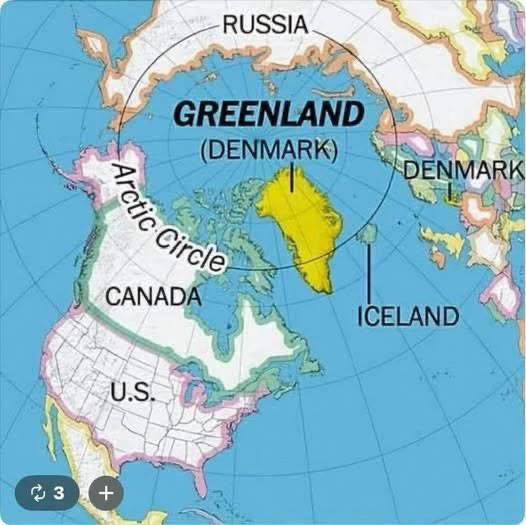
It sits at the meeting point between the Atlantic Ocean and the Arctic Ocean. The United States’ front yard, Greenland belongs to North America geologically.
Control of Greenland means control over access to the northern part of the continent. Greenland forms the central leg of the Greenland–Iceland–UK gap.
Considered the Arctic Lock, Greenland is the critical maritime corridor through which the Russian navy must pass to move from the Arctic into the Atlantic. The Chinese refer to polar cap security in its national security assessments.
Global warming is now melting the ice and exposing two strategic opportunities – dramatically shorter maritime trade routes and access to rare natural resources that were previously unreachable.
To ensure US Homeland and Hemispheric security, Trump is serious about US annexation of Greenland.
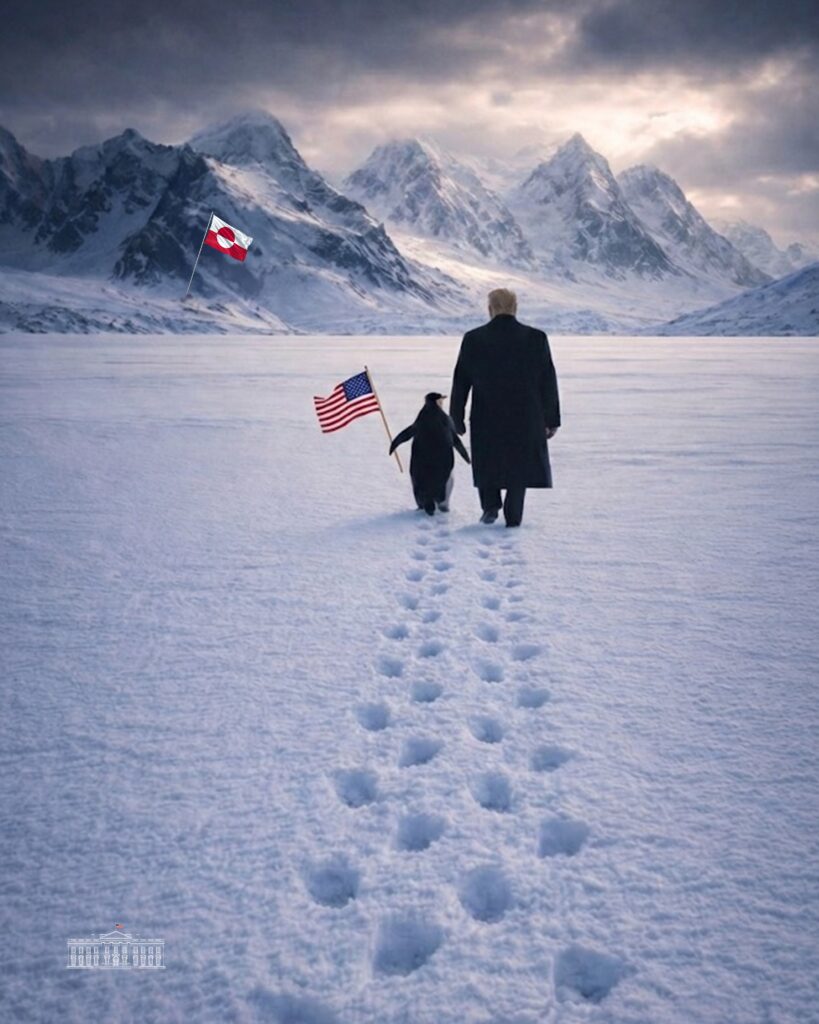
President Trump’s interest in Greenland has reached meme territory, with the White House posting an AI-generated image on Friday of President Trump walking with a penguin through a snowy, mountain landscape.
“Embrace the penguin,” the White House wrote on the social platform X, alongside a photo depicting a penguin holding an American flag next to Trump with Greenland’s flag planted in the background.
To ensure US Homeland and Hemispheric security, Trump is serious about US annexation of Greenland.
Targeting Iran
With the U.S. seeking regime reorientation in Iran, the 2026 NDS is a timely read. “President Trump has consistently made clear that Iran will not be allowed to acquire nuclear weapons. And with Operation MIDNIGHT HAMMER, he showed that he follows through on his word—decisively. No other military in the world could have executed an operation of such scale, complexity, and consequence as Operation MIDNIGHT HAMMER. Yet the Joint Force did so flawlessly and obliterated Iran’s nuclear program. U.S. forces also provided critical support to Israel’s defense throughout the 12-Day War, enabling Israel’s historic operational and strategic successes. Now, Iran’s regime is weaker and more vulnerable than it has been in decades.
Iran’s “Axis of Resistance” is similarly devastated. Israeli operations have left Hezbollah and Hamas severely degraded. At President Trump’s direction, the United States also launched Operation ROUGH RIDER, which degraded the Houthis’ strike capabilities and ultimately compelled the Houthis to sue for peace—and stop shooting at U.S. ships. In the process, through a short, sharp, and decisive campaign, the President was able to restore freedom of navigation for U.S. vessels.
Even so, although Iran has suffered severe setbacks over recent months, it appears intent on reconstituting its conventional military forces. Iran’s leaders have also left open the possibility that they will try again to obtain a nuclear weapon, including by refusing to engage in meaningful negotiations. Moreover, although Iran’s proxies have been severely degraded, they may also seek to rebuild devastated infrastructure and capabilities. Nor can we ignore the facts that the Iranian regime has the blood of Americans on its hands, that it remains intent on destroying our close ally Israel, and that Iran and its proxies routinely instigate regional crises that not only threaten the lives of American servicemembers in the region but also prevent the region itself from pursuing the kind of peaceful and prosperous future that so many of its leaders and peoples clearly wish for.
Yet there are significant opportunities before us as well. Israel has long demonstrated that it is both willing and able to defend itself with critical but limited support from the United States. Israel is a model ally, and we have an opportunity now to further empower it to defend itself and promote our shared interests, building on President Trump’s historic efforts to secure peace in the Middle East. Likewise, in the Gulf, U.S. partners are increasingly willing and able to do more to defend themselves against Iran and its proxies, including by acquiring and fielding a variety of U.S. military systems. This creates even more opportunities for us to enable individual partners to do more for their defense. It will also enable us to foster integration between regional partners, so that they can do even more together.”
Conclusion
Trump does not believe in maintaining the status quo. Trump is a disrupter. With Trump’s presidency, US defence, security and foreign policy priorities have shifted rapidly since January 2025. It is no longer working in cooperation, collaboration and partnership with nations but is marked by dramatic and momentous changes! A timely read for national security specialists and security forces personnel, the 2026 NDS explains the making of a new world order.
Rohan Gunaratna is a professor of Security Studies at the S. Rajaratnam School of International Studies at the Nanyang Technological University. He teaches national security and intelligence and homeland security and counter terrorism. He is a trainer of law enforcement, national security and military counter terrorism units; and is the author and editor of over 30 books.