
By Rohan Gunaratna
Introduction
Tehreek-e-Taliban Pakistan (TTP) seeks to establish an Islamic State in Pakistan similar to the Afghan Taliban. An Al Qaeda aligned Afghanistan based group, TTP uses the Al Qaeda training camps in Afghanistan. The ideology of TTP is akin to the Afghan Taliban and promotes its version of Sharia where girls are not permitted to go to school and women are not allowed to work. The foreign fighter contingent of TTP includes foreign nationals including Bangladeshis. Pakistan and Afghanistan went to war after TTP mounted attacks in Pakistan. By hosting foreign terrorist groups including Al Qaeda, TTP and another dozen groups, the Afghan Taliban is in violation of the Doha Agreement signed in February 2020 between the U.S. and the Taliban in Qatar.
The Context
A framework for the withdrawal of U.S. and NATO troops from Afghanistan, the Doha Agreement is contingent on the Taliban fulfilling security and counter-terrorism commitments, like preventing Afghan soil from being used by groups like Al Qaeda. It also sets terms for the Taliban to engage in direct talks with the Afghan government and release prisoners, but despite the U.S. largely meeting its withdrawal timeline, the Taliban failed to fully honor other key obligations, leading to continued violence and ultimately their takeover of Afghanistan in 2021.
Background
Key Provisions of the Doha Agreement are;
| U.S. Commitments: | Taliban Commitments: |
| Phased withdrawal of all U.S. and NATO forces within 14 months (by May 2021). | Prevent any group or individual from using Afghan territory to threaten the U.S. and its allies (counter-terrorism pledge). |
| Reduction of U.S. troops to 8,600 within 135 days. | Begin direct negotiations with the Afghan government (intra-Afghan talks). |
| Commitment to lift economic sanctions on the Taliban. | Cut ties with Al-Qaeda and other terrorist groups. |
| Participate in a prisoner exchange. |
Outcome:
The U.S. largely followed through with troop withdrawals, completing them by August 2021.
The Taliban generally avoided attacking U.S. and coalition forces but intensified attacks on the Afghan security forces and failed to sever ties with Al Qaeda.
The agreement paved the way for the Taliban’s rapid takeover as U.S. forces left, highlighting significant flaws and unmet conditions, according to U.S. officials.
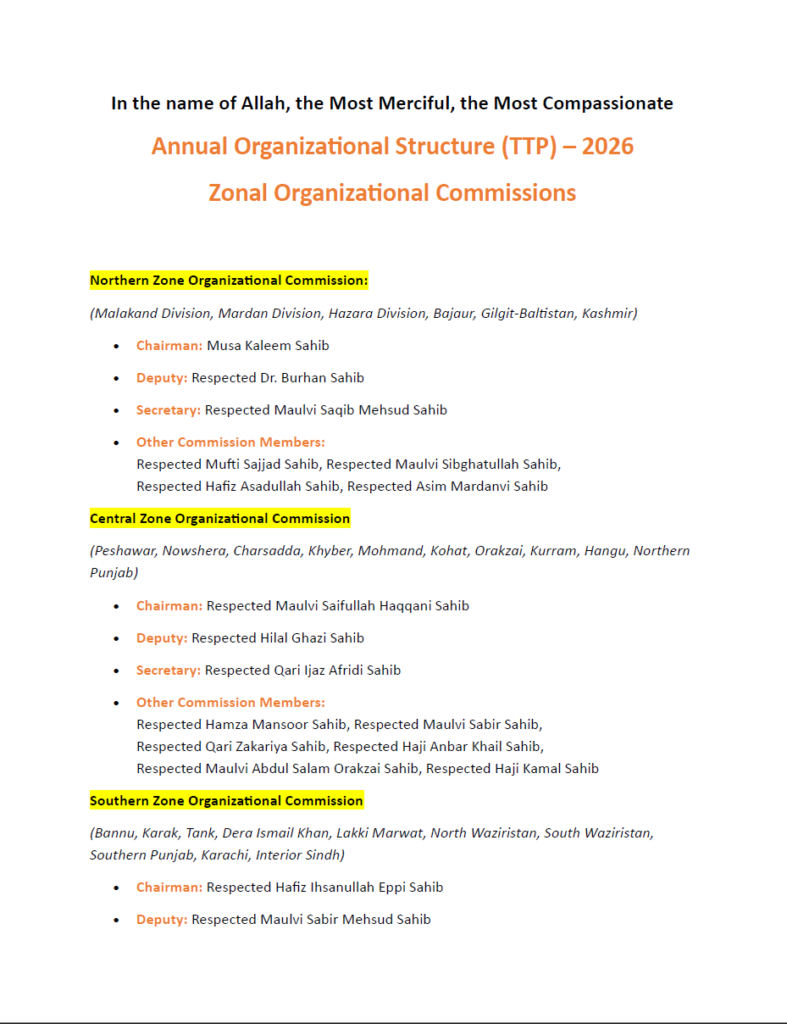
The TTP has established a formidable infrastructure in Afghanistan and a shadow government in tribal Pakistan. According to TTP sources, its structure is as follows:
Analysis
Can the Taliban be trusted?
Al Qaeda leader Ayman al-Zawahiri was located by the U.S. in Kabul after the U.S. withdrawal of forces in Afghanistan. In an over the horizon operation, the CIA fired two Hellfire missiles at the balcony of al-Zawahiri’s house in Kabul, the capital of Afghanistan on July 31, 2022. One of the planners of the September 11 attacks against the United States, Zawahiri succeeded Osama bin Laden as leader of Al Qaeda after bin Laden.
Iran’s intelligence service, the Iranian Revolutionary Guard Corps is hosting Saif Al Adel, the current leader of Al Qaeda.
The UN Analytical Support and Sanctions Monitoring Team stated, “As the Taliban maintain links to Al-Qaida, they also retain traditional ties to most regional terrorist entities, including the Islamic Movement of Uzbekistan (IMU) (QDe.010), Eastern Turkistan Islamic Movement (QDe.088), also known as the Turkistan Islamic Party (ETIM/TIP), and Jamaat Ansarullah (JA) (not listed). Contrary to statements to not allow Afghan soil to be used for attacks against other countries, the Taliban have harboured and allowed active support of Tehrik-e-Taliban Pakistan (TTP)(QDe.132), which routinely conducts attacks across the border in Pakistan.”
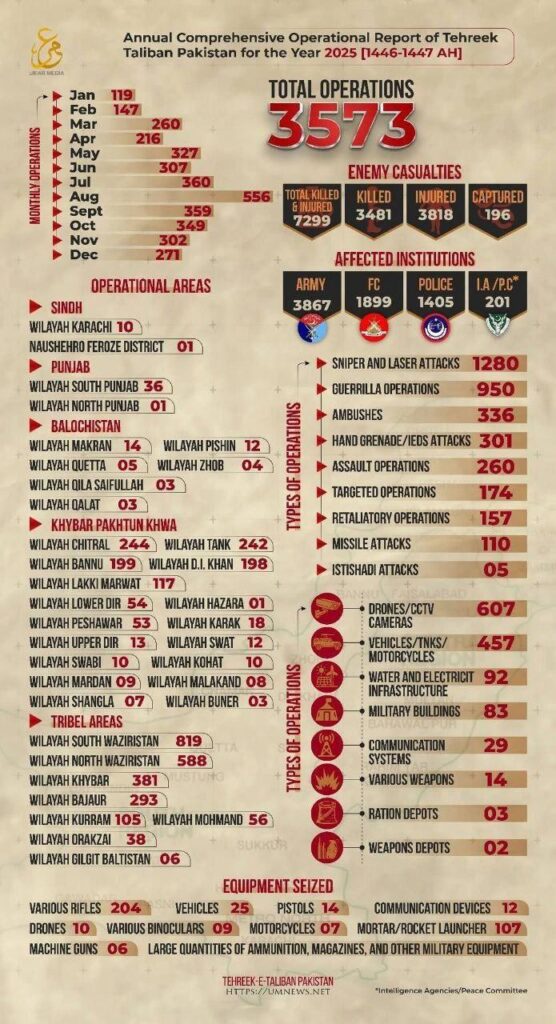
According to its annual report, the TTP has killed 3500 Pakistani Security Personnel in 2025.
Conclusion
The Afghan Taliban hosted Al Qaeda that led the U.S. to intervene in Afghanistan after Al Qaeda’s attack on US soil. The 9/11 attack killed 2,996 people, including 19 Al Qaeda hijackers and led to a devastating war in Afghanistan.
The Brown University Costs of War Project estimates over 176,000 direct deaths, including ~46,000 civilians, ~69,000 military/police, and ~53,000 opposition fighters; the total toll, including indirect deaths from the war’s effects, could reach 4.5-4.7 million people across the entire War on Terror.
Just like the Afghan Taliban, the TTP is a ruthless terrorist organisation with a global network. A proxy of Al Qaeda and a partner of the Afghan Taliban, TTP conducted and claimed the Times Square car bomb attack in New York City on May 1, 2010. Unless the TTP is dismantled, Pakistan will face a severe threat in the coming year and in the years to follow.
Rather than invite Afghan Taliban to visit their capitals for geopolitical gain, governments – India, Russia, China – should send an unequivocal message both to the Afghan Taliban and its Pakistani counterpart TTP that terrorism will not be tolerated.
Rohan Gunaratna is the Author of the book Inside Al Qaeda: Global Network of Terror. He debriefed Al Qaeda and Islamic State leaders. He is a trainer of law enforcement, national security and military counter terrorism units; and is the author and editor of 30 books.