
By Rohan Gunaratna
Introduction
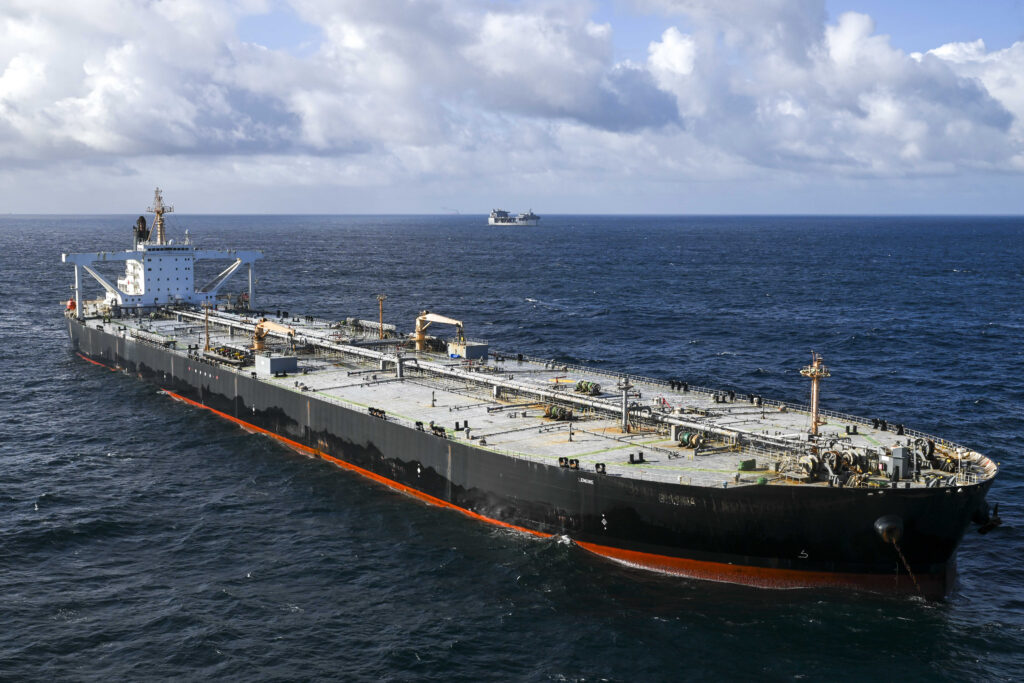
The U.S. forces have conducted a series of maritime interdictions and boardings of Iran-linked tankers carrying sanctioned oil in the Indian Ocean, including the stateless oil tanker MT Davina off the southern coast of Sri Lanka. The Davina, a supertanker capable of carrying up to two million barrels of crude oil, was placed under U.S. sanctions in October 2024 for Iranian oil trading, according to ship tracking data.[1]
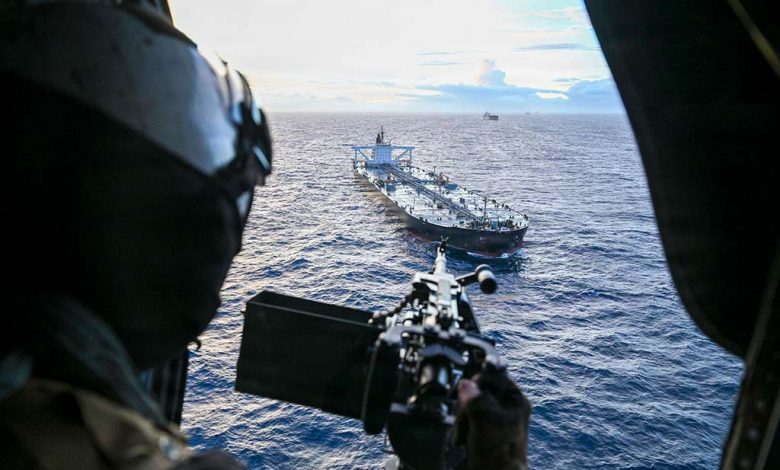
These actions come as part of ongoing U.S. maritime enforcement to disrupt illicit oil networks. Several vessels have been tracked or stopped in waters near Sri Lanka after hiding there for weeks, following previous interceptions in April. This follows a highly publicized incident earlier in March 2026, where a U.S. submarine sank the Iranian warship IRIS Dena off the Sri Lankan coast, which had been traveling in the region after a military exercise in India.
The Context
The United States has carried out another interdiction of a stateless tanker in the Indian Ocean. U.S. Indo-Pacific Command reported the boarding of the tanker attempting to hide 20 miles southwest of Sri Lanka.[2]
INDOPACOM identified the tanker as Davina (300,976 dwt), although most databases list the vessel as Lenore.[3] It is claiming a false registry in Curacao and, before that, had also falsely claimed it was sailing under the flag of Palau. Built in 2004, the vessel is listed as having been sold in October 2024 to unknown buyers and operators. The United States sanctioned the tanker in October 2024 for its involvement in the Iranian oil trade.
The United States operation to board and assert control over the stateless supertanker MT Davina represents a significant maritime enforcement success against Iran’s sanctions-evasion network. The early June 2026 mission in the Indian Ocean also underscores that the U.S. and its Allies and Partners possess the capability and resolve to identify, track and disrupt illicit maritime activities.
“We will continue global maritime enforcement to disrupt illicit networks and interdict vessels providing material support to Iran, wherever they operate,” the U.S. Indo-Pacific Command (USINDOPACOM) stated.[4]
Vessels operating within Iran’s so-called dark fleet often rely on a combination of manipulated identification transmissions, falsified documents, complex shell-company ownership structures and covert ship-to-ship transfers to obscure the origin and destination of illegal cargo.
Background
TankerTrackers.com reports the vessel is currently transporting 1.9 million barrels of Iranian crude oil loaded on March 20 at Kharg Island. The tanker has transported roughly 20 million barrels of Iranian oil since 2024.
The vessel left the Gulf before the U.S. began imposing the blockade. TankerTrackers.com reports it has been hiding off the coast of Sri Lanka for the past six weeks.
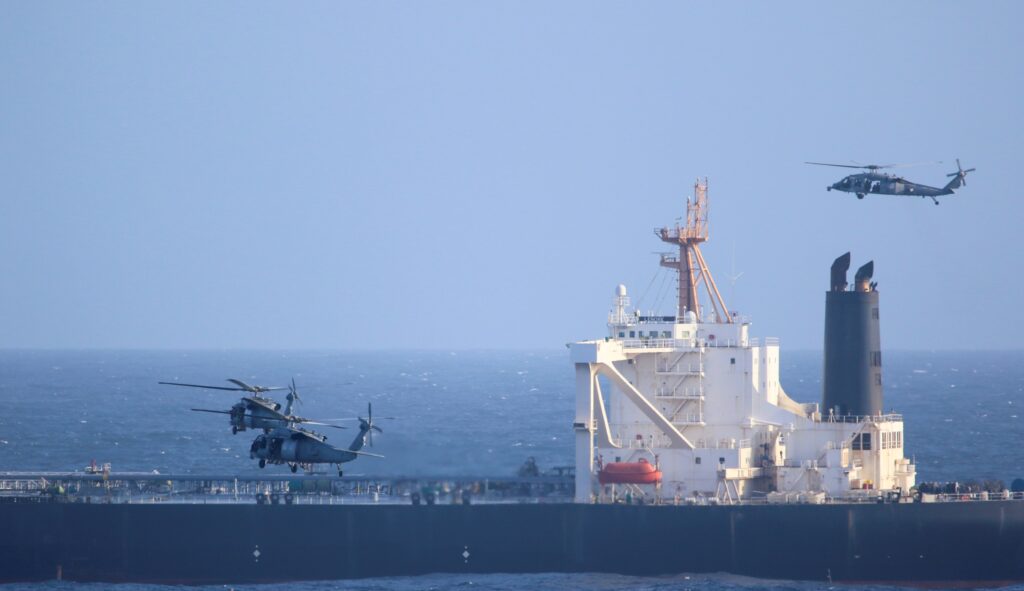
It is the third stateless tanker that INDOPACOM has reported seizing since mid-April.[5] On April 21, the U.S. seized the Tifani and two days later, on April 23, stopped the Majestic X (aka Phonix), both also sailing in the Indian Ocean or Bay of Bengal. A third tanker, Skywave (aka Blue Gulf), was reported by The Wall Street Journal as having been stopped in May, but not formally acknowledged by the Pentagon.
The latest interdiction, like the past ones, shows images of U.S. forces using helicopters to board the tanker. In one image, the vessel is seen to have its anchor down. In the background, a U.S. Navy Lewis B. Puller-class expeditionary mobile base appears to be involved in the boarding.[6]
The vessel, also known as the Lenore, was last seen on June 5 off Sri Lanka’s southern coast, ship tracking data on the MarineTraffic platform showed on June 5, 2026.[7]
The vessel’s draft indicated that it was almost fully laden with an oil cargo, separate shipping data showed.[8]
The Future
The conflict in the Middle East is expanding. Both the conflict in the Middle East and the geopolitical rivalry between the West and the East has a profound impact on Sri Lanka and its waters. The strategic location of Sri Lanka and its vital sea lines make the island nation a critical strategic waypoint for the transshipment of energy and global container traffic traveling between the Middle East and East Asia. Sri Lanka to the Strait of Malacca is 1,610 nm and cargo and tanker vessels typically take about 3 to 4 days. From Sri Lanka to the Strait of Hormuz is 2,000 nm and a commercial voyage to the Arabian Sea to the Persian Gulf entry takes about 4 to 5 days.
In the foreseeable future, both Iranian naval and commercial vessels will be attacked or interdicted by the U.S., its allies and friends. The very same way, Iranian Navy frigate IRIS Dena was torpedoed and sunk by the United States Navy’s Los Angeles-class submarine USS Charlotte 19 nautical miles off the coast of Galle, other Indian naval vessels will also be targeted. Similarly, vessels such as MT Davina transporting Iranian oil will be interdicted.
Conclusion
The U.S. CENTCOM said on June 5, 2026, that U.S. forces have now redirected a total of 129 commercial vessels and disabled 6 vessels to ensure compliance with the U.S.-imposed blockade of Iranian shipping and ports. “We will continue global maritime enforcement to disrupt illicit networks and interdict vessels providing material support to Iran, wherever they operate”.[9] U.S. operations against Iran are expanding to the Indian Ocean with tanker capture.[10]
Until and unless Iran ends it’s military nuclear program that threatens regional and global security, curbs it’s missile program that targeted 12 countries, and dismantles its militia partners and terrorist proxies, the conflict between Iran and the U.S., its allies and friends will continue. Russia and China will support Iran. The geopolitical rivalry and competition will contribute to global instability and insecurity.
—
Rohan Gunaratna is a professor of Security Studies at the S. Rajaratnam School of International Studies at the Nanyang Technological University. He is a trainer for law enforcement, national security and military counter terrorism units; and is the author and editor of over 30 books.
[1] https://www.al-monitor.com/originals/2026/06/us-forces-board-sanctioned-tanker-indian-ocean-pentagon-says
[2] https://maritime-executive.com/article/us-forces-board-sanctioned-stateless-tanker-carrying-iranian-oil
[3] https://www.pacom.mil/Media/Press-Releases-and-Readouts/Article/4509491/usindopacom-conducts-maritime-interdiction-operation-in-international-waters/
[4] https://ipdefenseforum.com/2026/06/u-s-s-supertanker-interdiction-highlights-intensified-campaign-against-illicit-maritime-networks/
[5] https://www.pacom.mil/Media/Press-Releases-and-Readouts/Article/4509491/usindopacom-conducts-maritime-interdiction-operation-in-international-waters/
[6] https://maritime-executive.com/article/us-forces-board-sanctioned-stateless-tanker-carrying-iranian-oil
[7] https://www.al-monitor.com/originals/2026/06/us-forces-board-sanctioned-tanker-indian-ocean-pentagon-says
[8] https://www.al-monitor.com/originals/2026/06/us-forces-board-sanctioned-tanker-indian-ocean-pentagon-says
[9] https://www.al-monitor.com/originals/2026/06/us-forces-board-sanctioned-tanker-indian-ocean-pentagon-says
[10] https://www.washingtonpost.com/national-security/2026/04/21/iran-ship-seizure-blockade/